 Save
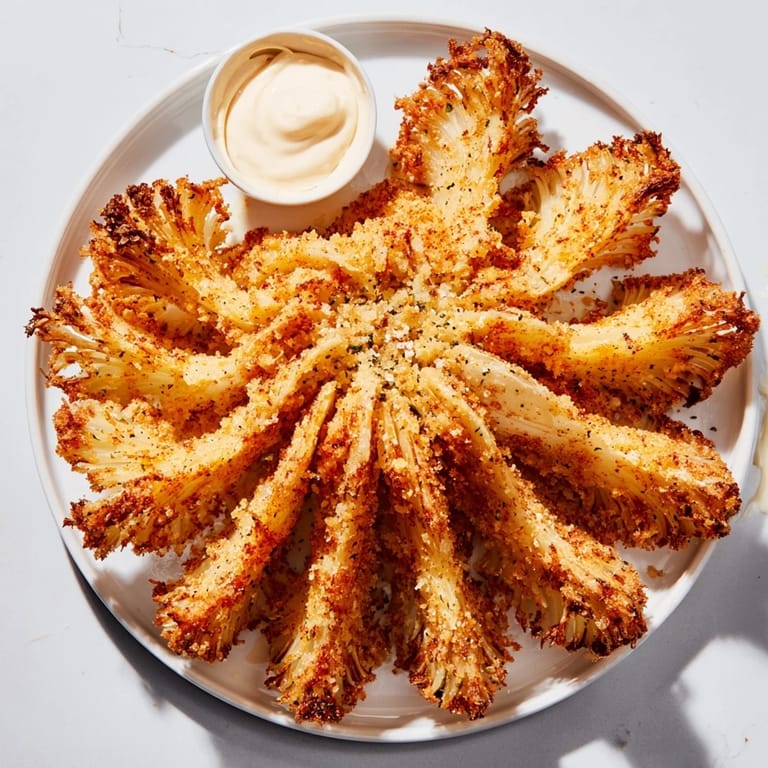
Save The first time I watched someone bite into a blooming onion, I understood why this dish became a legend. It was at a casual dinner party where my friend brought one she'd fried herself, and the table went silent except for the sound of people crunching through those impossibly crispy petals. I was hooked instantly, not just by how it tasted, but by how it made everyone slow down and pay attention to something as simple as an onion transformed into edible art.
I made this for my brother's birthday once, and he kept circling back to the serving plate like a curious bird, stealing petals between conversations. Watching someone you love enjoy something you created hits differently than any compliment, especially when they don't ask for permission before reaching for another piece.
Ingredients
- 1 large sweet onion (such as Vidalia): The sweetness is crucial here; it balances the savory spices and gets even sweeter as it caramelizes slightly during frying. Regular yellow onions will work but won't have that same gentle complexity.
- 2 1/2 cups all-purpose flour: This is your base for the crispy coating. Don't skip the double-dredging step; that's what gives you those shatteringly crisp petals.
- Paprika, garlic powder, dried oregano, salt, black pepper, cayenne pepper: This blend is balanced to complement without overpower. The paprika adds color and subtle smokiness, while cayenne gives a gentle heat that keeps everything interesting.
- 2 large eggs and 1 cup whole milk: This egg wash is what makes the second flour coating stick. Whole milk creates a richer, more cohesive batter than water would.
- Vegetable oil, for frying: You need enough depth for the onion to float and crisp evenly all around. This is not a shallow-pan situation.
- Mayonnaise, sour cream, ketchup, horseradish, smoked paprika, garlic powder, cayenne pepper: The sauce is where the umami lives. The horseradish gives it an unexpected kick that cuts through the richness of the fried coating beautifully.
Tired of Takeout? 🥡
Get 10 meals you can make faster than delivery arrives. Seriously.
One email. No spam. Unsubscribe anytime.
Instructions
- Make the sauce first and give it time to chill:
- Whisk together all the sauce ingredients in a small bowl and refrigerate it while you work on the onion. Cold sauce against hot fried petals is a flavor and temperature contrast that matters.
- Prep the onion with intention:
- Peel your onion and trim about half an inch off the top, leaving the root completely intact as your anchor. Place it cut-side down on a cutting board and make vertical cuts around it, spacing them evenly to create 12 to 16 petals. The key is stopping just short of the root; you want the petals connected at the base so they stay together during frying.
- Gently separate those petals:
- Flip the onion over and carefully spread the petals outward, like opening a flower. This takes a light touch and patience, but it's where the visual magic happens.
- Build your coating stations:
- In one bowl, combine flour with paprika, garlic powder, oregano, salt, black pepper, and cayenne. In another bowl, whisk eggs with milk until smooth and combined. These are your dry and wet layers.
- Double-dredge for maximum crispiness:
- Coat the onion thoroughly in the flour mixture, working it between every petal so nothing is missed. Shake off excess, then dip it into the egg mixture, again making sure the coating reaches between the petals. Finally, coat it a second time in the flour mixture and shake off any excess. This double coat is what creates that signature shatter when you bite into it.
- Heat your oil to the right temperature:
- You need at least 3 inches of vegetable oil heated to 375°F. Use a thermometer; this temperature matters because it's hot enough to crisp the exterior before the onion inside gets too soft.
- Fry with calm confidence:
- Using a slotted spoon or spider, lower the onion cut-side down into the hot oil. You'll hear it sizzle immediately. Fry for 6 to 8 minutes, turning it occasionally so it browns evenly on all sides.
- Finish with intention:
- Remove the onion to paper towels, season it lightly with salt while it's still hot, and serve immediately with that cold dipping sauce waiting alongside.
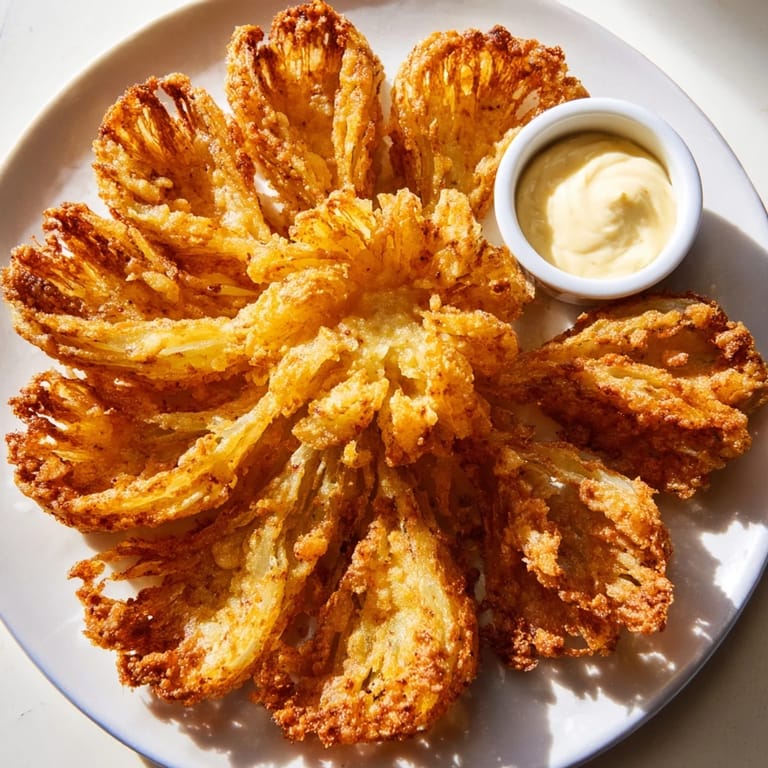 Save
Save There was a moment at that birthday dinner when my brother bit into a petal and closed his eyes for just a second. That's when I realized this dish isn't really about impressing people with technique; it's about creating a moment where someone forgets about everything else and just experiences something delicious.
The Art of Cutting
The cutting step is where people either get nervous or get confident. I used to think I needed a special blooming onion cutter, but honestly, a sharp chef's knife and a steady hand are all you need. The trick is to visualize the root as your anchor point and imagine drawing lines from that center outward, like spokes on a wheel. Take your time here, and you'll have an onion that looks like an actual flower. Rush it, and you'll end up with an onion that's more abstract art than appetizer.
The Oil Temperature Game
I learned this the hard way one afternoon when I thought I could eyeball whether the oil was ready. Spoiler: I couldn't, and the result was a greasy disaster that taught me the value of owning a thermometer. The moment oil hits 375°F, there's a shift in how it behaves. It's suddenly alive and ready to crisp rather than soak. If you're nervous about temperature, drop a tiny piece of onion in first; if it sizzles aggressively and floats immediately, you're ready to go. If it just sits there looking sad, give the oil more time.
Sauce Matters More Than You Think
The sauce could easily be overlooked since the onion itself is the star, but this is where the magic multiplies. That combination of mayo, sour cream, and horseradish creates something that's tangy, creamy, and just spicy enough to make you want another petal. I once served this with just ketchup out of laziness, and it was fine, but it wasn't the same experience. The proper sauce transforms the onion from good to unforgettable.
- Make the sauce at least an hour ahead so the flavors have time to meld and it's properly cold when served.
- If you like heat, add an extra pinch of cayenne or a dash of hot sauce to the dipping sauce.
- Keep any leftover sauce in the fridge; it's excellent on fries, burgers, or as a sandwich spread.
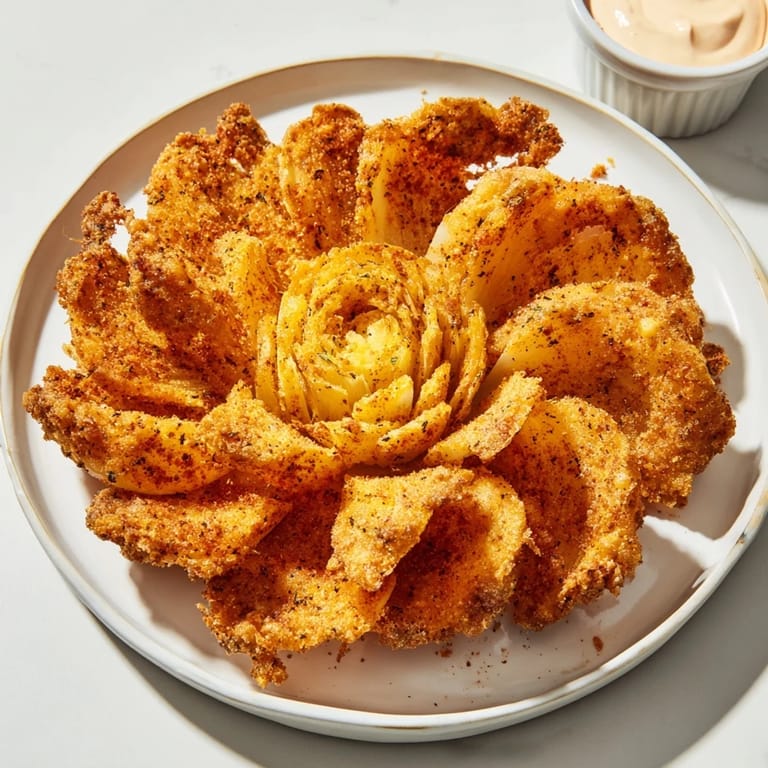 Save
Save There's something deeply satisfying about creating a dish that feels like restaurant magic but lives in your own kitchen. This blooming onion will become the appetizer people ask for, and honestly, you'll start making it more often than you expected.
Recipe FAQs
- → What type of onion works best for this dish?
A large sweet onion like Vidalia is ideal due to its mild flavor and suitable size for creating the blossom shape.
- → How do I cut the onion into the petal shape?
Trim the top slightly, keep the root intact, then make vertical cuts from top to root without slicing through the root, creating 12–16 petals.
- → What purpose does double dredging serve in the preparation?
Coating the onion twice in flour and egg mixtures ensures a thick, crispy batter that clings well during frying.
- → What oil temperature is recommended for frying?
The oil should be heated to about 375°F (190°C) to achieve a crisp outer layer without overcooking the onion inside.
- → Can the dipping sauce be prepared ahead of time?
Yes, the creamy dipping sauce can be mixed and refrigerated in advance to meld flavors before serving.
- → Are there any suggested seasonings to enhance flavor?
Adding a pinch of cayenne or chili powder to the flour mix can provide extra heat and depth.