 Save
Save There's something almost magical about watching layers of white cake emerge from the oven, their edges turning golden while the centers stay impossibly tender. The first time I made this coconut cake, I was intimidated by the meringue frosting—all that whisking over a double boiler felt like a kitchen ritual I wasn't sure I could pull off. But the moment that frosting transformed from liquid egg whites into billowy clouds, I understood why people keep returning to this recipe for their most important celebrations.
My neighbor brought this cake to our street's summer potluck, and I watched it disappear in minutes while people kept coming back for seconds. That's when I realized a homemade coconut cake with real meringue frosting does something store-bought versions never can—it creates a moment. Someone tried a bite and immediately asked for the recipe, which somehow made me feel like I'd shared more than just instructions.
Ingredients
- Cake flour: The key to tenderness; it has less protein than all-purpose, so your cake won't turn dense or tough.
- Baking powder: Makes sure the cake rises evenly without any sunken spots in the middle.
- Unsalted butter and egg whites: Room temperature butter creams better, and egg whites (no yolks) keep the crumb pure white and delicate.
- Vanilla extract: Use real vanilla—it makes a noticeable difference in flavor.
- Whole milk: Also room temperature, which helps it incorporate smoothly into the batter without shocking the mixture.
- Coconut milk and shredded coconut for filling: The unsweetened coconut milk adds subtle flavor while the sweetened shredded coconut provides texture and richness.
- Cream of tartar: Stabilizes the egg whites in the meringue so the frosting holds its shape longer.
- Toasted coconut for decoration: Toasting brings out a deeper, almost nutty flavor that elevates the whole cake.
Tired of Takeout? 🥡
Get 10 meals you can make faster than delivery arrives. Seriously.
One email. No spam. Unsubscribe anytime.
Instructions
- Get everything ready:
- Preheat your oven to 350°F and grease three 8-inch cake pans with butter, then dust them with flour so the cakes release cleanly. Having everything prepped means you can focus on the mixing without rushing.
- Mix the dry ingredients:
- Whisk together the cake flour, baking powder, and salt in a bowl and set it aside. This ensures the leavening is distributed evenly throughout the cake.
- Cream butter and sugar:
- Beat room-temperature butter with sugar for about 3 minutes until it looks pale and fluffy like clouds. This step aerates the batter, which is essential for a tender, light crumb.
- Add egg whites gently:
- Add each egg white one at a time, mixing well after each addition so they blend smoothly. If you rush this, the mixture can look curdled, but it will come together once you add the flour.
- Alternate flour and milk:
- Add the flour mixture and milk in three additions, starting and ending with flour, mixing just until combined. Overmixing develops gluten and toughens the cake, so stop as soon as you don't see streaks of flour.
- Bake the layers:
- Divide batter evenly among the three pans and bake for 25 to 30 minutes until a toothpick comes out clean. The cakes should spring back when you touch the center.
- Cool properly:
- Let cakes cool in the pans for 10 minutes (they firm up and release easier), then turn them out onto wire racks to cool completely. This step prevents the layers from breaking when you assemble the cake.
- Make the coconut filling:
- Warm coconut milk and sugar together, stirring until the sugar dissolves, then stir in the shredded coconut and let it cool. You want it thick enough to spread without sliding off the layers.
- Whisk the meringue frosting:
- Set a heatproof bowl over simmering water (don't let it touch the water) and whisk egg whites, sugar, water, and cream of tartar until stiff peaks form, about 7 minutes. The warmth from below helps the mixture whip into glossy peaks, which means the frosting will be stable and silky.
- Assemble the cake:
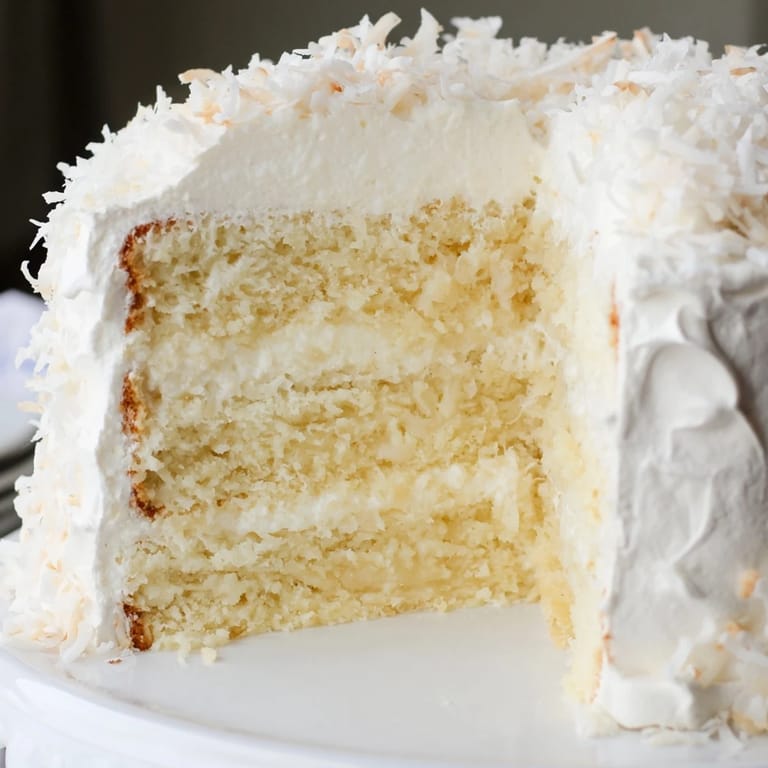
- Layer each cake with the coconut filling, ending with the plain third layer on top. This structure lets the filling shine between each layer without overflowing.
- Frost and decorate:
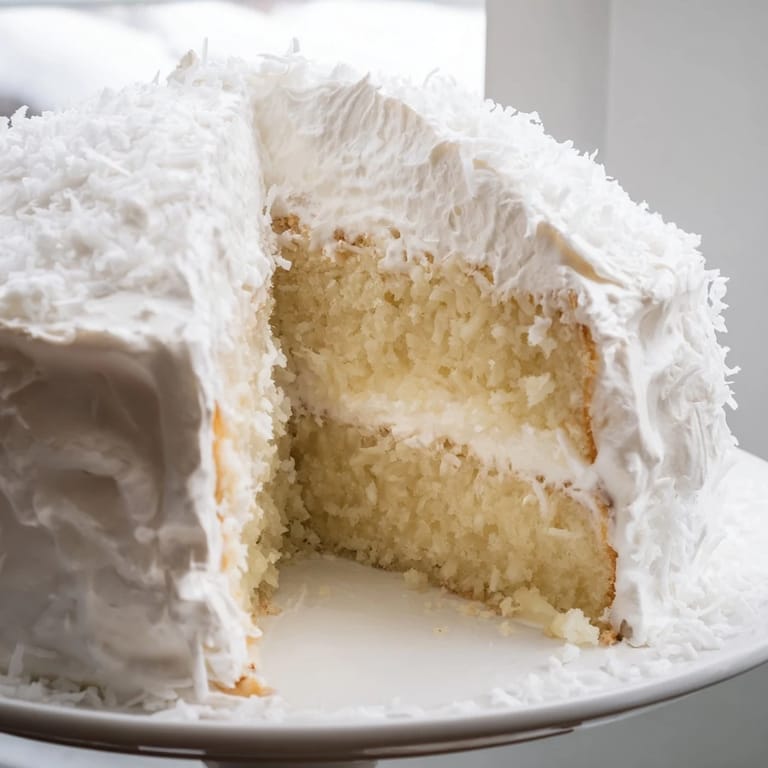
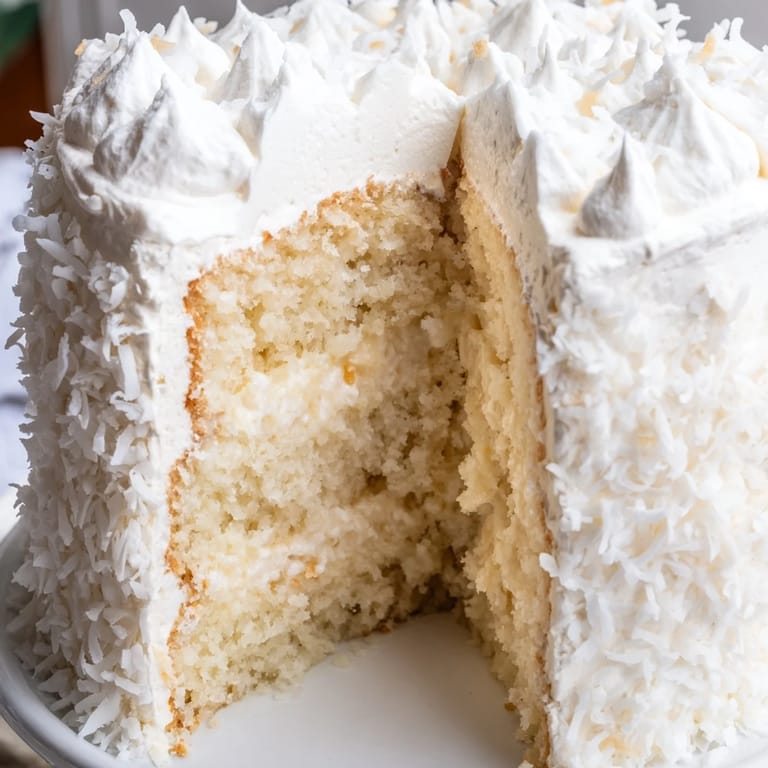
- Spread the meringue frosting all over the cake with an offset spatula, then press shredded coconut into the sides and across the top. The frosting is so forgiving that imperfect swoops and swirls look intentional and charming.
- Let it set:
- Wait at least 30 minutes before slicing so the frosting can firm up and the layers can settle together. Patience here prevents the cake from collapsing when you cut.
 Save
Save I remember my daughter's fourth birthday party, when she insisted on a coconut cake instead of the usual chocolate. Watching her face light up when she saw the three white layers stacked high with that puffy frosting made all the whisking worthwhile. Her friends asked for bites before the cake was even cut, and suddenly I understood why my mother always made this cake for special occasions.
Why This Cake Feels Special
Unlike dense sheet cakes that feel heavy after a slice or two, this coconut cake is almost ethereal—the meringue frosting is so light it practically melts on your tongue. The combination of coconut milk in the filling and shredded coconut throughout creates layers of flavor that develop as you eat, so the last bite tastes just as good as the first. There's also something inherently celebratory about a three-layer cake; it signals that someone took time and care to make something special.
Customizing Your Version
Once you nail the basic recipe, you can start playing with variations that suit your taste. I've experimented with adding a tablespoon of coconut extract to the cake batter for deeper flavor, and I've even tried mixing toasted coconut into the frosting itself for a subtle crunch. Some bakers add a splash of rum to the filling or brush the cooled cake layers with coconut-flavored simple syrup before assembling, which keeps everything moist.
Serving and Storage
This cake is truly best eaten the day it's made, when the frosting is at its peak and hasn't begun to set into meringue foam. Serve it with black tea, sparkling wine, or even a simple glass of cold milk—the coconut flavor goes with almost anything. If you have leftovers, loosely cover them and refrigerate; the frosting will firm up but the cake stays moist underneath.
- Slice with a hot, damp knife between each cut for clean edges.
- The cake serves 12 generously, but rich desserts like this go a long way.
- Toast the coconut for decoration just before assembling if you want maximum crunch and color.
 Save
Save This coconut cake has become the dessert I turn to whenever I want to impress someone or mark a moment with something beautiful. Every time I make it, I'm reminded that the best recipes aren't just about ingredients and instructions—they're about the conversations, laughter, and memories that happen around the table afterward.
Recipe FAQs
- → What gives the cake its tender texture?
The use of cake flour combined with well-creamed butter and sugar ensures a soft, delicate crumb in the cake layers.
- → How is the coconut filling prepared?
The filling is made by simmering coconut milk with sugar, then stirring in shredded coconut until thick and spreadable, allowing the flavors to meld as it cools.
- → What is seven-minute frosting and how is it made?
Seven-minute frosting is a glossy, fluffy topping made by beating egg whites with sugar, water, and cream of tartar over simmering water until stiff peaks form.
- → Can the frosting be made ahead of time?
It is best enjoyed fresh on the day it is made to retain its light and airy texture.
- → Any tips for decorating with coconut?
Toasted shredded coconut adds a pleasant crunch and golden color when pressed onto the frosted cake's sides and top.