 Save
Save There's something about the smell of roasting garlic that makes you forget why you even came to the kitchen in the first place. A few years back, I was rushing through dinner prep on a Wednesday when I decided to roast the garlic instead of just mincing it raw, and that one small decision completely changed how I approach this soup. Now whenever I make it, I pause at that exact moment to breathe in, because that's when you know the whole dish is going to taste like home.
I made this for my sister when she was going through a rough patch, and she sat at my kitchen counter with a bowl cradled in her hands, quiet except for the occasional sigh of contentment. She came back three times that week asking for leftovers, which told me everything I needed to know about whether this recipe was worth keeping in rotation.
Ingredients
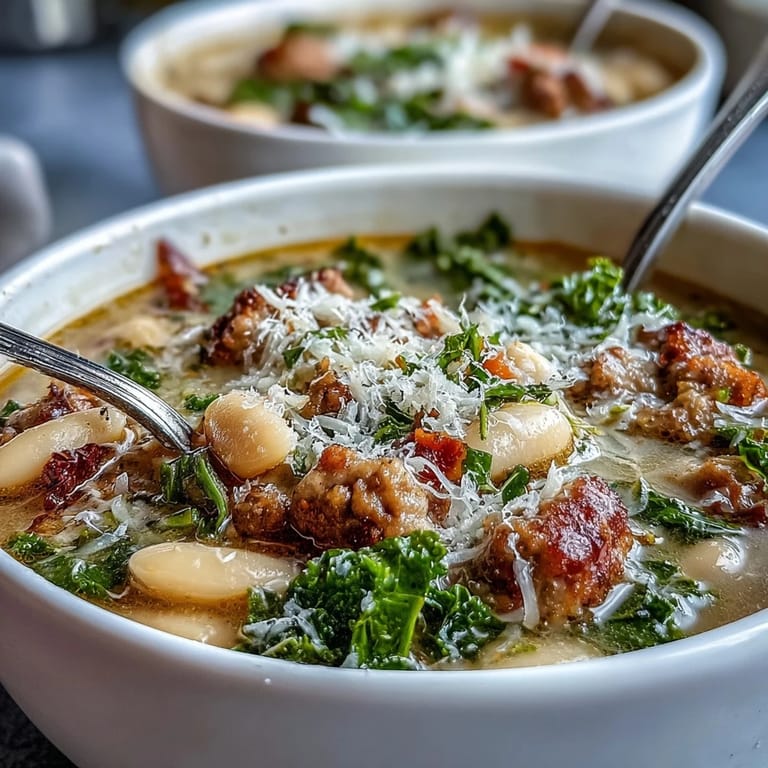
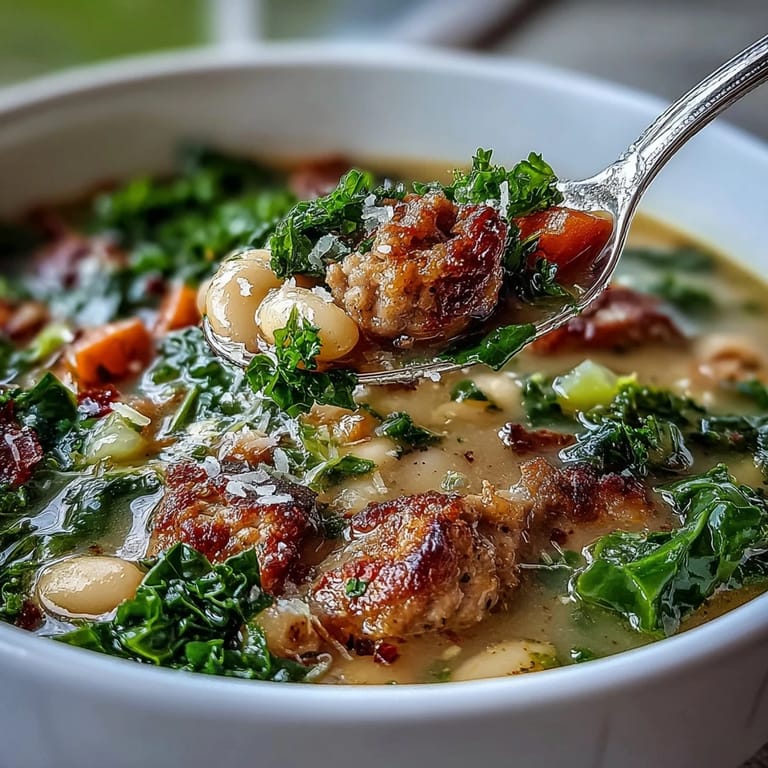
- Spicy Italian sausage, 1 lb (450 g): The backbone of this soup—look for one with real fennel seeds and heat, and don't skip removing those casings or you'll have weird chunks instead of a proper brown crust.
- Olive oil, 2 tbsp: Use a decent quality, not the fancy stuff, but something that doesn't taste like you're frying in cardboard.
- Yellow onion, 1 large: The sweetness matters here, so don't rush the sauté—give it time to soften and turn golden at the edges.
- Carrots and celery, 2 medium and 2 stalks: This trio with onion is your foundation, the holy trinity that makes everything taste intentional.
- Garlic, 6 cloves: Roasting transforms garlic from sharp to sweet and creamy, which is the entire secret to why this tastes restaurant-quality.
- Tuscan kale, 1 bunch (about 6 oz/170 g): The darker, more tender cousin of regular kale—it doesn't get bitter when cooked down, and the texture actually improves in hot broth.
- Cannellini beans, 2 cans (15 oz/425 g each): Rinse these thoroughly or your broth will be cloudy and starchy, which changes the whole feeling of the soup.
- Chicken broth, 6 cups (1.5 L): Low-sodium is essential here because you're controlling the salt, and store-bought can be surprisingly aggressive.
- Water, 1 cup (240 ml): This mellows out the broth so it doesn't overpower the vegetables and beans.
- Dried thyme and oregano, 1 tsp each: Dried herbs work beautifully here—fresh would actually be lost in the long cooking, so don't second-guess the recipe.
- Red pepper flakes, 1/2 tsp (optional): This is your heat control, and honestly, I never skip it because the warmth balances the earthiness perfectly.
Tired of Takeout? 🥡
Get 10 meals you can make faster than delivery arrives. Seriously.
One email. No spam. Unsubscribe anytime.
Instructions
- Roast the garlic until it turns golden:
- Set your oven to 400°F (200°C), place peeled garlic cloves on foil, drizzle with a touch of olive oil, wrap it up, and roast for 20 minutes. You'll know it's ready when the cloves are soft enough to mash with a fork and smell unbelievably fragrant. This step is worth the wait because roasted garlic has a completely different personality than raw.
- Brown the sausage until it's broken into small pieces:
- Heat 1 tablespoon olive oil in your large pot over medium heat, then add the sausage and break it apart with a spoon as it cooks, about 6 to 8 minutes. You want it deeply browned with no pink remaining, and this is where the flavor foundation gets built. Don't rush this—let the meat actually caramelize against the pot.
- Sauté the vegetables until they're soft and starting to turn golden:
- Remove the sausage, add the remaining olive oil, then throw in onion, carrots, and celery. Cook for about 6 minutes until they're soft and the onion is turning transparent at the edges. This is your moment to taste and adjust—are you happy with the texture, or do they need another minute?
- Bloom the herbs with the roasted garlic:
- Stir in your mashed roasted garlic, thyme, oregano, and red pepper flakes, cooking for just 1 minute. This step might seem small, but heating the herbs releases their oils and makes the whole pot smell like you've been cooking all day. It's magic, honestly.
- Build the soup with beans and broth:
- Return the sausage to the pot, add the beans, broth, and water, then bring everything to a boil. Reduce heat and simmer uncovered for 15 minutes so some of the liquid reduces and flavors concentrate. You'll notice the broth turning deeper and richer—that's exactly what you want.
- Add the kale and finish cooking:
- Stir in your chopped kale and simmer for another 10 to 12 minutes until it's tender but still a vibrant green. The kale will soften beautifully into the broth, and the soup goes from good to genuinely craveable. Taste it now—this is when you know if you need more salt or heat.
- Taste and season to your preference:
- Add salt and freshly ground black pepper until it tastes exactly right to you. Remember that you're seasoning a broth, so it should taste slightly more flavorful than you think it needs—it'll balance out when served.
 Save
Save 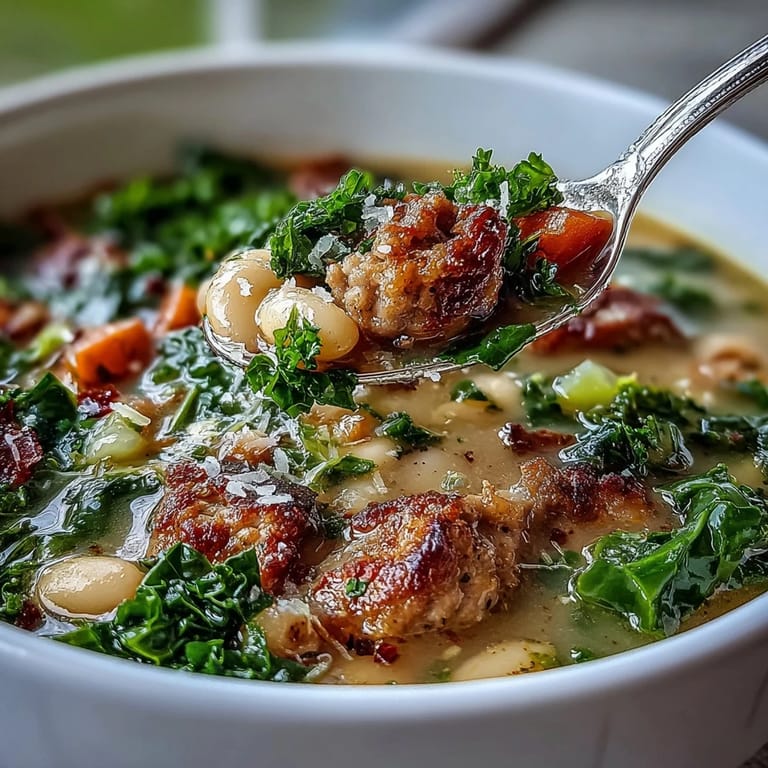 Save
Save I've learned that the best soups are the ones you make without overthinking, the ones where you follow your instincts more than the recipe. This soup taught me that when you roast your garlic and take time with your vegetables, you don't need fancy ingredients or hours on the stove—you just need to pay attention.
The Secret of Roasted Garlic
Roasting garlic is one of those kitchen moves that feels like cheating because it's so easy but transforms everything. When raw garlic hits hot broth, it's sharp and sometimes almost aggressive, but roasted garlic becomes sweet and creamy, almost like butter dissolving into the soup. The first time I realized this difference, I started roasting garlic for everything—soups, stews, even just to spread on toast. It's the kind of technique that doesn't seem to matter until you taste it.
Why Tuscan Kale is the Right Choice
Tuscan kale (also called lacinato or cavolo nero) has this tender quality that regular curly kale doesn't have, which means it actually gets better the longer it simmers instead of turning bitter. The leaves are thinner and more delicate, so they absorb the broth like a sponge instead of staying tough and chewy. If you can't find Tuscan kale, spinach or Swiss chard will work, but they'll cook down faster, so add them in the last few minutes instead.
Making It Your Own
This soup is forgiving enough to bend to whatever you have in your kitchen or whatever your mood demands. I've made it with sun-dried tomatoes, added white wine, swapped in different beans, even thrown in roasted red peppers when I had them on hand. The structure stays the same—sausage, vegetables, beans, broth—but the details are yours to play with. Some nights I want it spicier, other nights I go gentle with the heat and add a Parmesan rind instead for richness.
- A whole Parmesan rind added during simmering adds umami depth that tastes like you worked all day.
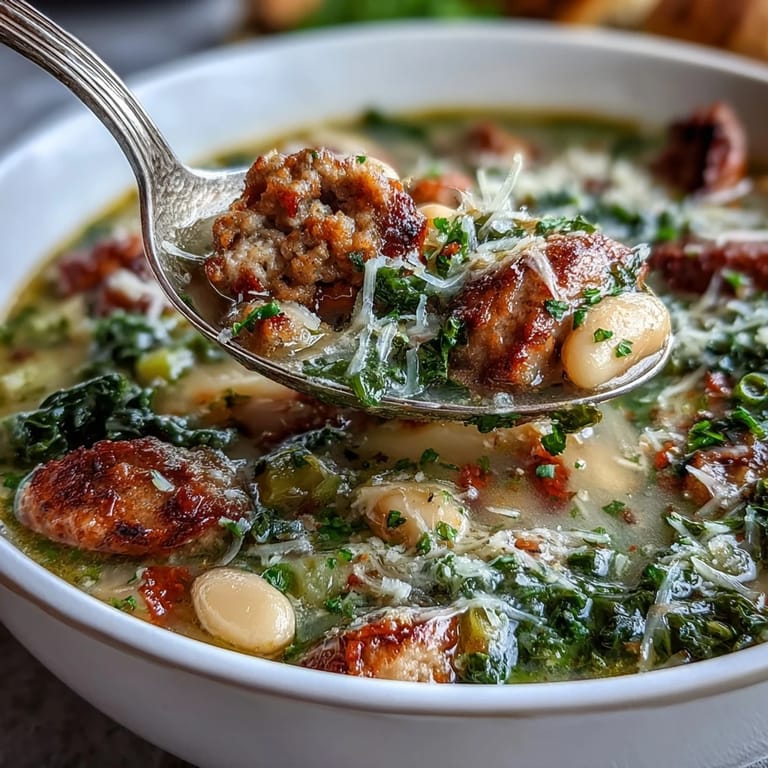
- Finish with a good glug of extra virgin olive oil and fresh Parmesan because the last impression matters.
- This soup actually tastes better the next day after the flavors have time to get to know each other.
 Save
Save 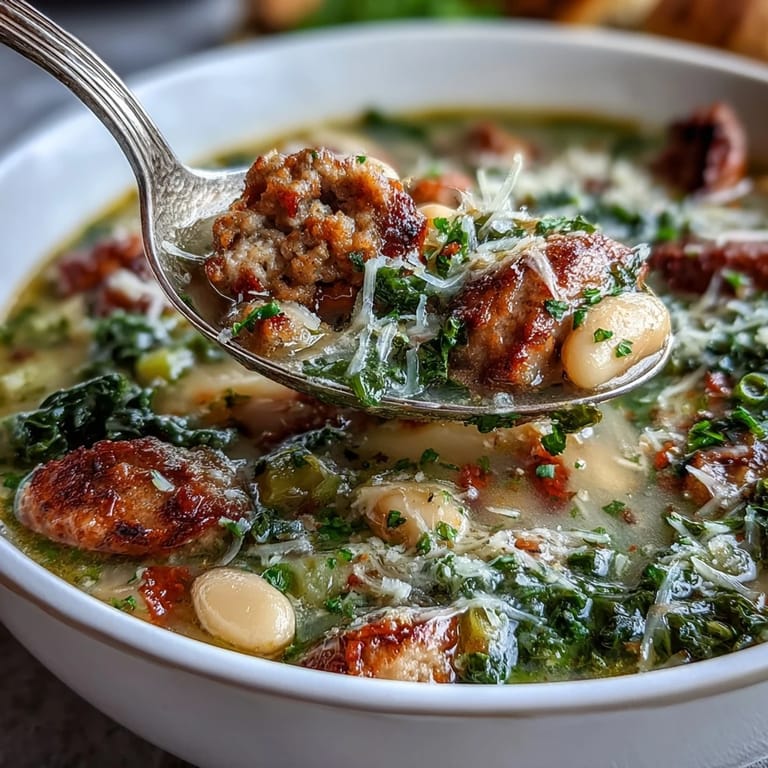 Save
Save This is the kind of soup that reminds you why you cook in the first place—it's nourishing and real, the kind of thing you actually want to make again. Serve it with crusty bread, a bowl of Parmesan, and maybe someone you want to sit with for a while.
Recipe FAQs
- → Can I use a different type of bean?
Yes, Great Northern beans, navy beans, or even chickpeas work well as substitutes for cannellini beans while maintaining the creamy texture.
- → How do I store leftover soup?
Store in an airtight container in the refrigerator for up to 4 days. The soup also freezes beautifully for up to 2 months in freezer-safe containers.
- → Can I skip roasting the garlic?
While roasting adds sweetness and depth, you can use 4-5 minced raw garlic cloves sautéed with the vegetables if you're short on time.
- → What can I substitute for Italian sausage?
Use ground turkey or chicken seasoned with fennel, garlic, and red pepper flakes, or try plant-based sausage for a vegetarian version.
- → How can I make the soup thicker?
Mash some of the beans against the pot side before adding the kale, or puree 1-2 cups of the soup and stir it back in for extra creaminess.
- → Can I use a different type of greens?
Absolutely. Spinach, Swiss chard, or escarole are excellent alternatives to kale. Add spinach at the very end as it wilts quickly.