 Save
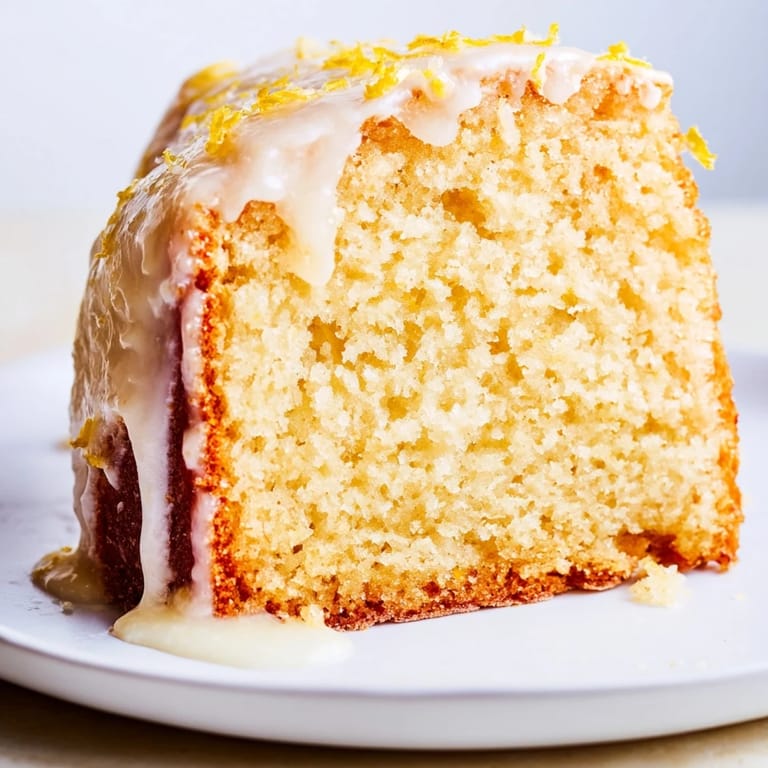
Save My neighbor knocked on the door one afternoon with a plate of lemon pound cake, still warm, and I watched her eyes light up as she described how her kitchen smelled like sunshine while it baked. That single bite—dense, buttery, with that perfect sharp brightness of lemon—became the reason I finally learned to make it myself. The first time, I was nervous about overmixing, but once I tasted that tender crumb and watched the glaze pool into all the right places, I understood why this cake shows up at garden parties and quiet afternoons alike. Now it's become my answer to almost every occasion, from bringing it to a friend's kitchen to sharing it with someone who needed something homemade and real.
I made this for a friend's book club once, and halfway through the meeting someone said, 'This cake is making me forget to read.' There's something about a slice of lemon pound cake that stops conversation in the best way—everyone just gets quiet and eats, and somehow that feels like the real connection.
Ingredients
- Unsalted butter and granulated sugar: Creaming these together for a few minutes creates the tender crumb that makes pound cake so special—don't rush this step, and make sure your butter is truly soft.
- Eggs at room temperature: Cold eggs won't incorporate smoothly and can make the batter grainy; pull them out of the fridge while you're prepping everything else.
- Fresh lemon juice and zest: The zest carries the most lemon perfume, so grate it finely and use the brightest lemons you can find—this is where the soul of the cake lives.
- All-purpose flour, baking powder, and salt: Whisking these together prevents lumps and distributes the leavening evenly throughout.
- Whole milk: This keeps the crumb tender; it's a secret weapon that prevents the cake from becoming too dense.
- Powdered sugar and fresh lemon juice for the glaze: Sifting the sugar prevents lumps and makes the glaze smooth and glossy.
Tired of Takeout? 🥡
Get 10 meals you can make faster than delivery arrives. Seriously.
One email. No spam. Unsubscribe anytime.
Instructions
- Prepare your space:
- Preheat your oven to 350°F and grease your loaf pan with butter, then dust it with flour, or line it with parchment paper so the cake slides out without sticking. Having everything ready means you can focus on the batter.
- Cream the butter and sugar:
- Beat them together for 3 to 4 minutes until the mixture turns pale and fluffy—you should see it almost double in volume. This step incorporates air, which is what gives pound cake its tender texture.
- Add the eggs one at a time:
- Beat well after each egg so it emulsifies into the butter mixture. If you add them too quickly, the batter can break and the cake won't rise as well.
- Combine the wet ingredients:
- Mix the milk, fresh lemon juice, and lemon zest in a small bowl so they're ready to go. The lemon juice will slightly curdle the milk, and that's exactly right.
- Whisk the dry ingredients:
- In another bowl, whisk the flour, baking powder, and salt together thoroughly. This distributes the leavening so the cake rises evenly.
- Alternate and fold gently:
- With the mixer on low speed, add the flour mixture in three additions, alternating with the milk-lemon mixture and starting and ending with flour. Mix just until combined—overmixing toughens the cake, so stop as soon as you don't see streaks of flour.
- Fill and smooth:
- Pour the batter into your prepared pan and smooth the top with a spatula. A level cake bakes more evenly.
- Bake until golden:
- Bake for 50 to 55 minutes until a toothpick inserted in the center comes out clean or with just a few moist crumbs. The top should be golden and the cake should smell absolutely incredible.
- Cool with patience:
- Let the cake sit in the pan for 10 minutes, then turn it out onto a wire rack to cool completely. This prevents the bottom from sweating and getting soggy.
- Glaze and finish:
- Whisk together the powdered sugar and fresh lemon juice until smooth and pourable, then drizzle it over the cooled cake. Let the glaze set for at least 30 minutes before slicing so it firms up.
 Save
Save My sister once served this cake at her daughter's birthday party, and a five-year-old asked for seconds before she'd even finished her first slice. That's when I realized this cake isn't trying to be fancy or complicated—it's just honestly, generously delicious, and that's its whole charm.
Variations That Work
If you want to push the lemon flavor further, stir half a teaspoon of lemon extract into the batter—it adds a bright floral note that catches people off guard in the best way. You can also steep the lemon zest in the milk for a few minutes before mixing to deepen the flavor. Some people add a touch of vanilla extract for complexity, though the cake shines without it.
How to Store It
Wrapped tightly at room temperature, this cake keeps for three days and actually tastes better on day two when the flavors settle into the crumb. If you want to make it ahead, you can bake it a day early and wrap it unglazed, then add the glaze the morning you plan to serve it. Refrigerate only if you need to store it longer than three days, but let it come back to room temperature before serving so the crumb stays tender.
What to Serve It With
A slice pairs beautifully with strong tea or good coffee, and fresh berries or a dollop of whipped cream make it feel like dessert instead of breakfast. Some people dust it with a tiny pinch of fleur de sel before the glaze sets, and the salt against the lemon brightness is quietly perfect.
- Fresh raspberries or blueberries add tartness that echoes the lemon.
- Whipped cream softens the density of the cake and adds a cloud of richness.
- A cup of tea is the only accompaniment this cake truly needs.
 Save
Save This cake reminds me that the best recipes are the ones that taste like home, no matter whose kitchen you're in. Make it once, and it becomes yours.
Recipe FAQs
- → What gives this cake its lemon flavor?
The lemon flavor comes from fresh lemon juice and finely grated lemon zest combined into the batter and the glaze, providing bright citrus notes throughout.
- → How can I tell when the cake is fully baked?
Insert a toothpick into the center. If it comes out clean or with a few moist crumbs, the cake is done baking.
- → Why should I not overmix the batter?
Overmixing can develop gluten in the flour, resulting in a tougher texture instead of the desired tender crumb.
- → Can I use a different pan size for baking?
It’s best to use a 9x5-inch loaf pan to ensure even baking and correct cooking time for proper texture.
- → How long should I allow the glaze to set?
Allow the glaze to set at room temperature for about 30 minutes before slicing to achieve a smooth, firm finish.
- → Can this cake be stored safely?
Wrap tightly and keep at room temperature for up to three days to maintain freshness and moisture.