 Save
Save My friend Sarah brought onion petals to a game night years ago, and I watched people abandon their regular snacks entirely. She wouldn't share the recipe that evening, just smiled and said they were easier than they looked. When I finally made them myself at home, I understood why she kept them secret—there's something almost magical about how a whole onion transforms into crispy golden petals that feel fancy but taste like pure comfort food. Now they're my go-to when I want to impress without spending hours in the kitchen.
I made these for my partner's birthday dinner once, and he was skeptical until he took his first bite—then he ate half the batch before the main course arrived. That's when I realized these petals work as both an appetizer and a test of your willpower. The aroma alone while they're frying is enough to bring people wandering into the kitchen.
Ingredients
- Sweet onions like Vidalia: These have natural sweetness that balances the spice, and they're tender enough to stay moist inside while the outside crisps up. Regular yellow onions work but taste sharper.
- All-purpose flour: The base of your coating, and mixing it with the seasonings means flavor is baked into every layer, not just sitting on top.
- Buttermilk: Creates that tangy richness in your batter—don't skip it for regular milk, as the acidity makes the crust stay crispy longer.
- Eggs: Bind everything together and help that second coating stick, which is your secret to extra crunch.
- Paprika, garlic powder, and onion powder: These three create a savory base that echoes the onion itself, building flavor rather than fighting it.
- Cayenne and black pepper: The kick that makes people reach for the sauce immediately after tasting them.
- Vegetable oil for frying: Use a neutral oil with a high smoke point so it won't break down during the 350°F temperature.
- Mayonnaise base for the sauce: Creamy and mild enough to carry the heat from the horseradish and hot sauce without overwhelming the palate.
- Horseradish: This is where the sauce gets its personality—adds sharp heat that makes your sinuses tingle slightly in the best way.
Tired of Takeout? 🥡
Get 10 meals you can make faster than delivery arrives. Seriously.
One email. No spam. Unsubscribe anytime.
Instructions
- Preparing Your Onion Blooms:
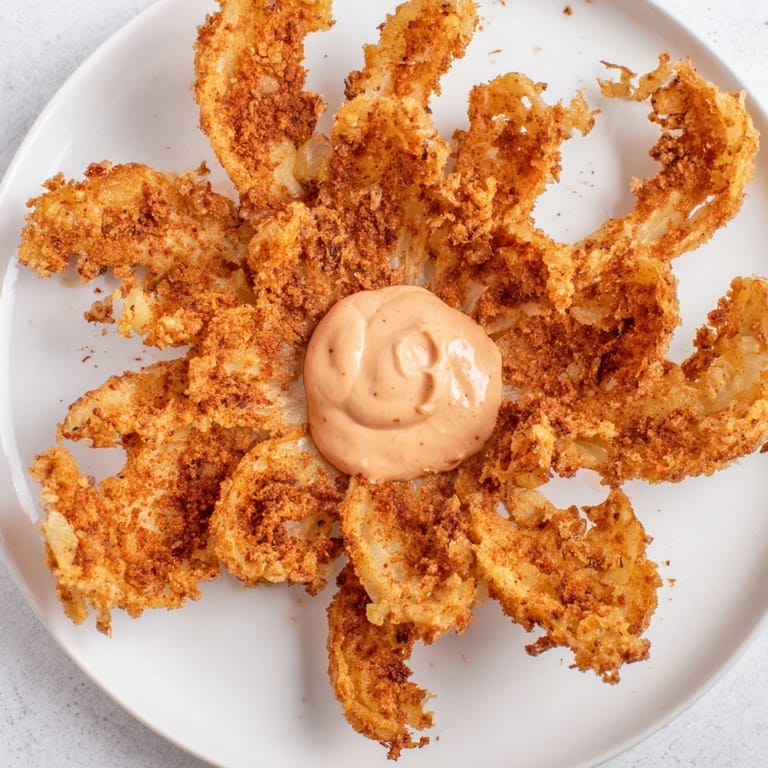
- Cut the stem end off your onion and peel away the papery skin, then place it root-side down on your cutting board. Make vertical cuts from the top toward the root, cutting about three-quarters of the way through, leaving that root intact to hold everything together—this is what lets the petals stay connected and bloom outward like a flower.
- Building Your Coating Station:
- Whisk together your flour with all the dry seasonings in one bowl so they're evenly distributed, which is the difference between flat-tasting petals and ones that taste seasoned throughout. In another bowl, whisk your buttermilk and eggs until they're smooth and pale.
- The Double-Dip Secret:
- Roll your onion bloom in the flour mixture first, making sure every petal gets coated and shaking off the excess so you don't end up with thick clumps. Then dunk it completely into the buttermilk mixture and back into the flour—this second coating is what gives you that extra-crispy, almost shattered crust.
- Getting Your Oil Ready:
- Heat your oil to 350°F in a heavy pot or deep fryer, and test it with a tiny piece of batter to make sure it sizzles immediately without burning. If it browns too fast, your oil is too hot and the inside won't cook through.
- Frying Your Petals:
- Place each onion bloom cut-side down into the oil first so those open petals get that initial blast of heat, which separates them slightly and helps them crisp. After 3 to 4 minutes, flip it gently and cook for another 3 to 4 minutes until it's golden brown all over and the petals feel crispy when you tap them with your spoon.
- Making the Sauce:
- Whisk together your mayo, ketchup, horseradish, paprika, garlic powder, onion powder, and hot sauce in a bowl until it's smooth and well-combined. Taste it and add more hot sauce or salt if it feels like it's missing something.
 Save
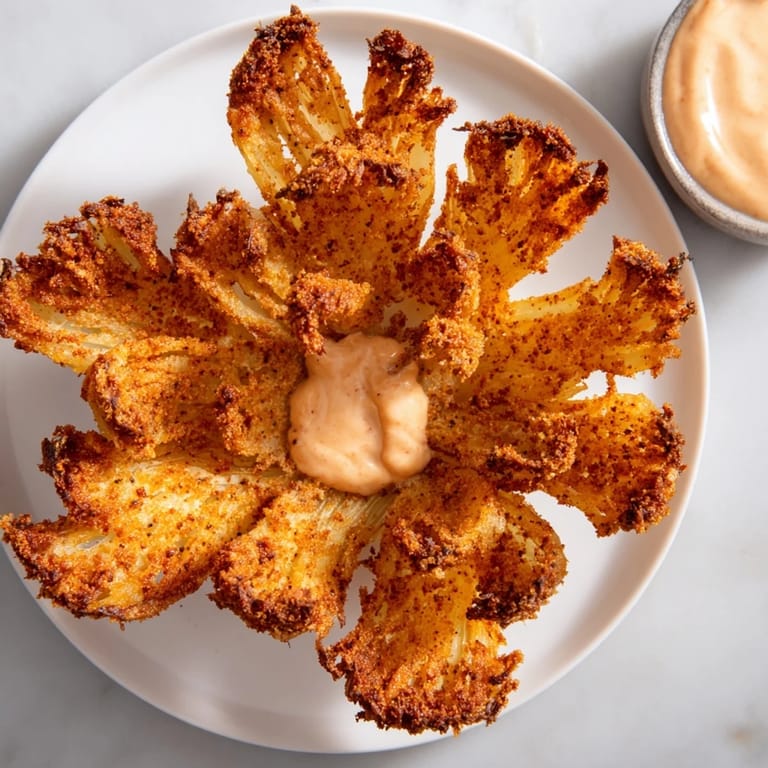
Save There's a moment when you pull that golden onion bloom out of the oil and the steam rises off it, and you realize you've essentially created an entirely new vegetable through technique alone. That moment is when fried food makes sense to me as an art form.
The Blooming Technique Matters
The way you cut determines whether you get delicate petals that crisp individually or thick chunks that stay dense inside. I learned this the hard way my second attempt, when I cut too shallow and ended up with mostly fried onion rather than petals. Now I score deep enough that the petals separate visibly even before frying, which means the hot oil reaches all that surface area and creates actual crunch rather than just browning the outside.
Oil Temperature and Timing
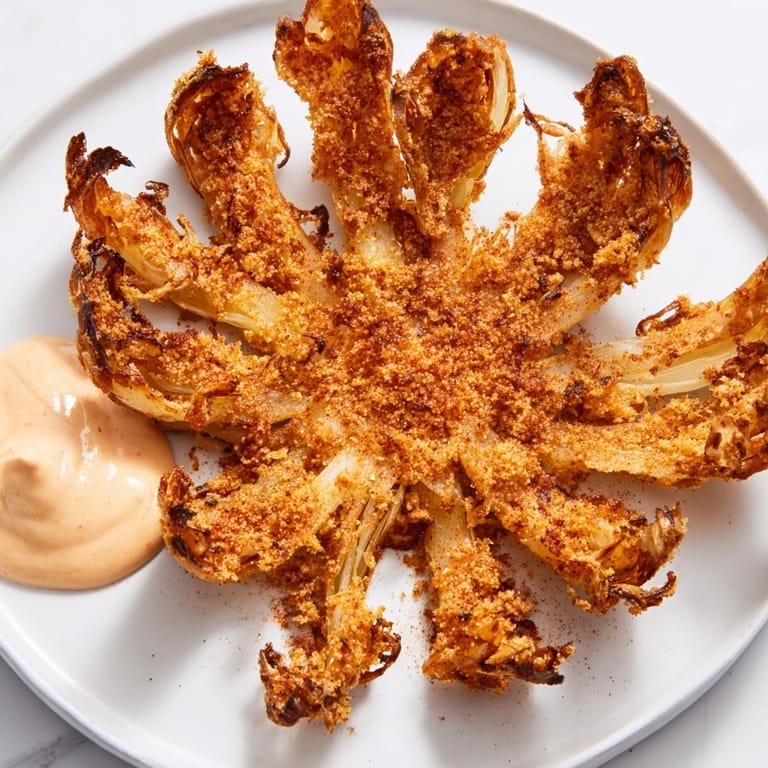
A thermometer becomes your best friend here because guessing at oil temperature is how you end up with burnt outsides and raw insides, which happened to me once when I was impatient and turned up the heat. The 350°F mark is consistent enough that onions cook through completely in that 6 to 8 minute window, with the exterior turning that burnished golden-brown that signals they're ready. If your oil is too cool, the petals absorb oil instead of crisping, and if it's too hot, they brown before the inside softens.
Sauce Customization and Serving
That base sauce works as written, but I've found the best version is the one adjusted to your personal heat tolerance and the crowd you're feeding. Some people love it milder with just a whisper of horseradish, while others want you to add more hot sauce until it's genuinely fierce. One helpful thing I discovered is making the sauce ahead and letting it sit in the fridge for an hour—the flavors settle and become more cohesive rather than tasting like separate ingredients mixed together.
- Blue cheese dressing works surprisingly well if your guests prefer something cooler and tangy instead of spicy.
- A ranch-horseradish hybrid hits that creamy-heat balance if you want something less adventurous than the full spicy version.
- Serve these immediately after draining so they're still crispy—they don't reheat well and that crunch is the whole point.
 Save
Save These onion petals became my shortcut to looking like I spent way more time cooking than I actually did, and somehow that feels earned when they turn out crispy and golden. They're one of those recipes where technique matters more than ingredients, which is honestly more satisfying to master.
Recipe FAQs
- → How do you get the onion petals to bloom properly?
Make vertical cuts from top to bottom without cutting through the root, then gently separate each petal to allow them to open up like a flower before coating and frying.
- → What gives the onion petals their crispy texture?
A double coating process of seasoned flour and a buttermilk-egg mixture creates a crunchy, golden crust when fried in hot oil.
- → Can I adjust the heat level of the dipping sauce?
Yes, adding extra cayenne pepper or hot sauce to the batter and dipping sauce enhances the spiciness according to your taste.
- → What kind of onions work best for this dish?
Large sweet onions, like Vidalia, provide the best flavor and texture for tender, flavorful petals.
- → Are there alternative dips that complement the petals?
Besides the spicy sauce, ranch or blue cheese dips make excellent alternatives with creamy and tangy flavors.
- → What is the recommended frying temperature for the petals?
Maintain oil temperature around 350°F (175°C) for even cooking and a crisp golden finish.