 Save
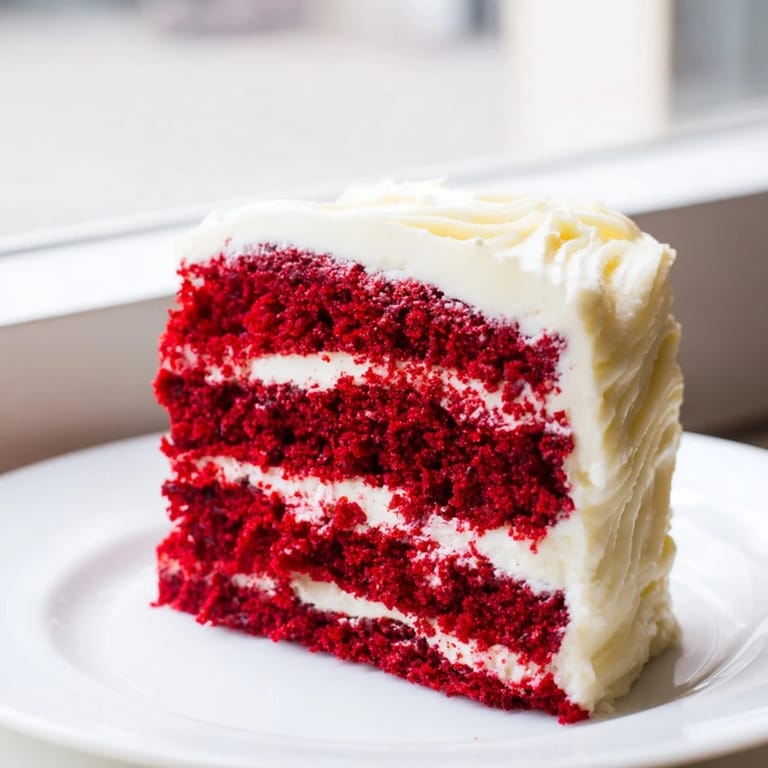
Save The first slice I ever cut into a red velvet cake was at my aunt's birthday dinner, and I remember thinking it looked almost too pretty to eat. The deep crimson layers against that cloud of white frosting felt like something from a bakery window, not a home kitchen. But one bite changed everything: the soft crumb, the subtle cocoa, the tangy sweetness of the cream cheese. I went home that night determined to recreate it, and after a few lopsided attempts, I finally nailed it.
I made this cake for my best friend's bridal shower last spring, and the way her face lit up when I brought it out made all the effort worth it. We sat on her porch afterward, eating leftover slices straight from the pan, laughing about old memories and new plans. That cake became part of the day, not just dessert but a piece of the celebration itself.
Ingredients
- All-purpose flour (2 ½ cups, 315 g): The base of the cake, giving it structure without weighing it down. Sifting it with the cocoa and leavening agents helps avoid lumps and ensures an even crumb.
- Unsweetened cocoa powder (2 tablespoons): This isn't a chocolate cake, so a little goes a long way. It adds depth and a hint of earthiness that makes the red color pop even more.
- Baking soda (1 teaspoon): The leavening agent that reacts with the vinegar and buttermilk to create a tender, airy texture. Don't skip the vinegar; it's part of the magic.
- Salt (½ teaspoon): Balances the sweetness and enhances all the other flavors. I always use fine sea salt for even distribution.
- Granulated sugar (1 ½ cups, 300 g): Sweetens the cake and helps create that light, fluffy texture when creamed with butter. Don't rush this step.
- Unsalted butter (1 cup, 230 g, softened): Adds richness and moisture. Let it sit at room temperature so it creams properly with the sugar.
- Eggs (2 large, room temperature): Bind everything together and add structure. Room temperature eggs incorporate more smoothly and create a better emulsion.
- Buttermilk (1 cup, 240 ml, room temperature): The secret to that tender crumb and subtle tang. If you don't have buttermilk, add a tablespoon of vinegar to regular milk and let it sit for five minutes.
- Vanilla extract (2 teaspoons): Adds warmth and rounds out the flavor. Use pure extract if you can; it makes a difference.
- White vinegar (1 teaspoon): Works with the baking soda to create lift and tenderness. It's a classic red velvet trick.
- Red food coloring (1 ounce, 30 ml): The signature look. Gel food coloring gives a more vibrant, deeper red without adding extra liquid.
- Vegetable oil (½ cup, 120 ml): Keeps the cake moist and tender even after it's been in the fridge. Oil-based cakes stay soft longer than butter-only cakes.
- Cream cheese (8 ounces, 225 g, softened): The star of the frosting. Make sure it's truly softened or you'll end up with lumps.
- Unsalted butter (½ cup, 115 g, softened, for frosting): Adds richness and helps the frosting hold its shape. Beat it well with the cream cheese for a silky texture.
- Powdered sugar (4 cups, 480 g, sifted): Sweetens and thickens the frosting. Sifting prevents gritty bits and makes it cloud-light.
- Vanilla extract (1 teaspoon, for frosting): A little more warmth and sweetness to complement the tangy cream cheese.
- Salt (pinch, for frosting): Balances the sweetness and makes the cream cheese flavor shine.
Tired of Takeout? 🥡
Get 10 meals you can make faster than delivery arrives. Seriously.
One email. No spam. Unsubscribe anytime.
Instructions
- Preheat and Prep Your Pans:
- Set your oven to 350°F (175°C) and grease two 9-inch round cake pans, then dust them lightly with flour. This step keeps the cakes from sticking and makes turning them out so much easier.
- Sift the Dry Ingredients:
- In a medium bowl, sift together the flour, cocoa powder, baking soda, and salt. Sifting might feel old-fashioned, but it aerates the flour and prevents lumps, which makes a real difference in the final texture.
- Cream the Butter and Sugar:
- In a large bowl, beat the sugar and softened butter together until the mixture is light, fluffy, and pale. This usually takes about 3 to 4 minutes with an electric mixer, and it's the foundation of a tender crumb.
- Add the Eggs:
- Add the eggs one at a time, beating well after each addition. This helps the batter emulsify properly and keeps it smooth instead of curdled.
- Mix in the Oil and Flavorings:
- Stir in the vegetable oil, vanilla extract, and white vinegar until everything is well combined. The vinegar might seem odd, but it reacts with the baking soda to give the cake its signature lift.
- Combine Buttermilk and Food Coloring:
- In a small bowl, mix the buttermilk and red food coloring together. The color will look almost too bright, but it bakes down to that classic deep red.
- Alternate Wet and Dry:
- Add the dry ingredients to the wet mixture in three parts, alternating with the buttermilk mixture, starting and ending with the dry. Mix until just combined; overmixing can make the cake dense and tough.
- Divide and Bake:
- Pour the batter evenly into the prepared pans and smooth the tops with a spatula. Bake for 28 to 30 minutes, or until a toothpick inserted in the center comes out clean with just a few moist crumbs.
- Cool Completely:
- Let the cakes cool in the pans for 10 minutes, then turn them out onto wire racks to cool completely. Frosting a warm cake is a recipe for disaster, so be patient here.
- Make the Frosting:
- Beat the softened cream cheese and butter together until smooth and creamy, scraping down the sides of the bowl as needed. Gradually add the sifted powdered sugar, vanilla, and a pinch of salt, beating until the frosting is light and fluffy.
- Assemble the Cake:
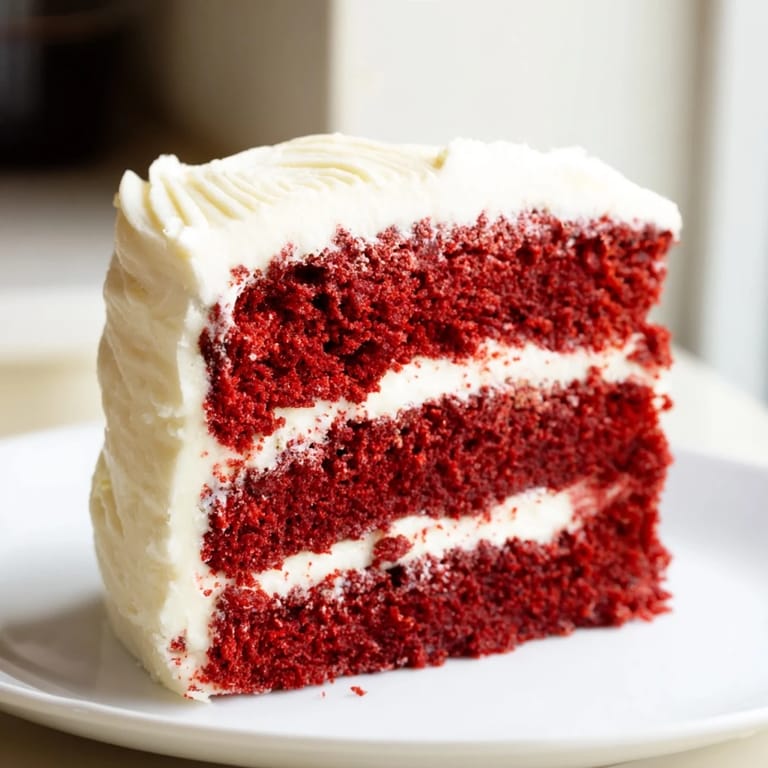
- Place one cake layer on a serving plate and spread a generous layer of frosting on top. Set the second layer on top and frost the top and sides, using a spatula to smooth it out or leave it slightly rustic.
 Save
Save I'll never forget the look on my nephew's face when I brought this cake to his birthday party. He'd asked for something red, and when I lifted the lid off the cake stand, his eyes went wide. We all gathered around the table, and for a moment, it wasn't just a cake but the centerpiece of the whole celebration. That's the magic of red velvet: it turns any occasion into something a little more special.
How to Get That Perfect Red Color
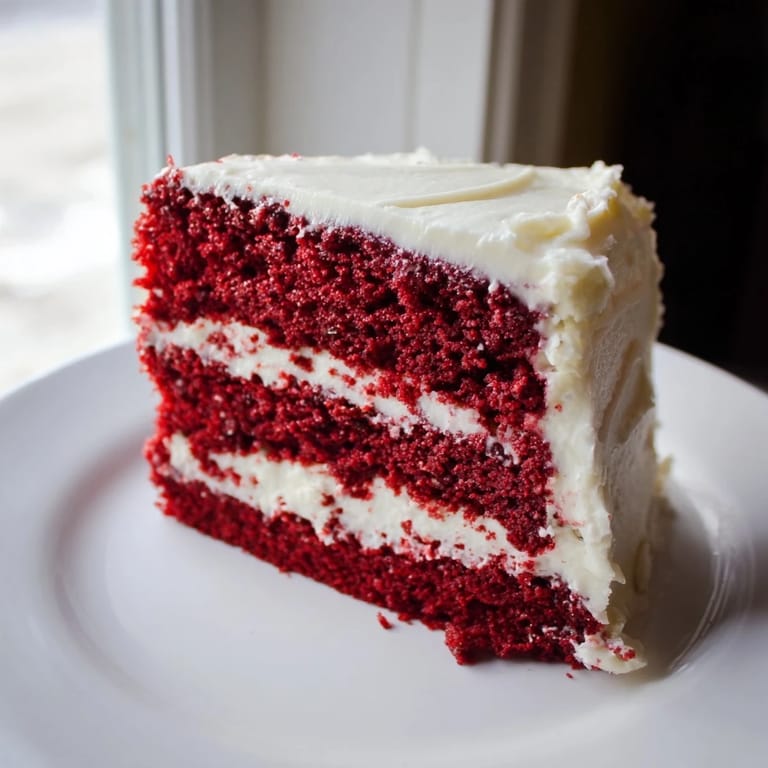
The first time I made this, I used liquid food coloring and ended up with more of a pinkish-brown cake instead of that vibrant red I was hoping for. Gel food coloring is the way to go; it's more concentrated, so you get a deeper color without adding too much liquid to the batter. Start with the amount listed in the recipe, but if you want an even more dramatic red, you can add a bit more gel. Just remember, the color will deepen slightly as the cake bakes, so don't go overboard.
Storing and Serving Tips
This cake keeps beautifully in the fridge for up to five days, covered loosely with plastic wrap or in a cake carrier. The cream cheese frosting needs to stay cold, so don't leave it out on the counter for more than a couple of hours. When you're ready to serve, let it sit at room temperature for about 20 minutes so the frosting softens up a bit and the flavors come through. I like to pair it with a cup of strong coffee or even a glass of sparkling wine if it's a special occasion.
Troubleshooting and Variations
If your cake turns out dense, you likely overmixed the batter after adding the flour. Mix just until you don't see any more streaks of flour, then stop. If the frosting is too soft, pop it in the fridge for 10 minutes to firm up before spreading it on the cake. You can also experiment with flavor: a teaspoon of espresso powder in the batter deepens the cocoa flavor, or you can fold in a handful of finely chopped pecans for a little crunch.
- For a chocolate twist, increase the cocoa powder to ¼ cup and reduce the flour slightly.
- If you want a less sweet frosting, cut the powdered sugar down to 3 cups and add an extra tablespoon of cream cheese.
- Garnish with fresh raspberries, white chocolate shavings, or even a sprinkle of cake crumbs for a rustic, homemade look.
 Save
Save This cake has become my go-to for celebrations, the kind of dessert that makes people lean in and ask for the recipe before they've even finished their slice. I hope it becomes that for you, too.
Recipe FAQs
- → What gives the cake its red color?
The vibrant red color is achieved using red food coloring, which can be gel-based for a deeper hue.
- → How is the cake texture described?
The cake is moist and velvety with a tender crumb, thanks to the combination of buttermilk, vinegar, and balanced mixing.
- → What makes the frosting creamy and smooth?
The frosting combines softened cream cheese and butter, whipped together with powdered sugar and vanilla for a light, fluffy texture.
- → Can this dessert be prepared ahead of time?
Yes, it can be refrigerated for up to 5 days when stored covered, allowing flavors to meld beautifully.
- → What tools are essential for making this cake?
You’ll need two 9-inch round pans, mixing bowls, an electric mixer, spatula, sifter, and a wire cooling rack.
- → How do the vinegar and buttermilk affect the cake?
They react with baking soda to provide a light texture and subtle tang that balances the cocoa's richness.