 Save
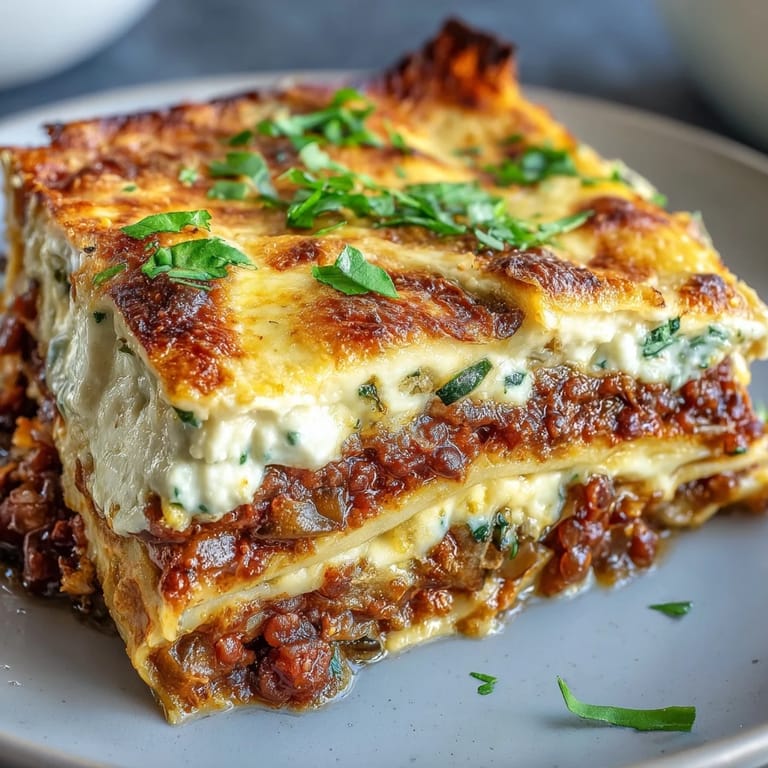
Save There's something quietly satisfying about cooking an entire lasagne in one pan—no juggling pots, no regret about the mountain of dishes waiting. My first attempt at this smoky lentil version happened on a Tuesday evening when I'd promised to bring dinner to friends but couldn't face the usual fuss. What started as a time-saving shortcut turned into something I now make regularly, especially when the kitchen feels too small and my patience too short for elaborate setups.
I made this for my neighbor who'd just moved in, and she arrived with a housewarming gift the next day—apparently she'd eaten the whole pan in two sittings and wanted to know if I could teach her. That moment, standing in her kitchen while she rehashed the flavors she'd noticed, reminded me that good food doesn't need to be complicated to matter to people.
Ingredients
- Olive oil: This is your cooking base, so don't skimp on quality—it flavors everything that follows.
- Onion and garlic: The aromatic foundation that softens and sweetens as they cook down with the other vegetables.
- Carrot, red bell pepper, mushrooms, courgettes: Each one adds texture and sweetness; the mushrooms especially bulk out the sauce with an umami depth.
- Smoked paprika: The secret weapon that makes this taste nothing like ordinary lentil sauce—don't skip it or substitute with regular paprika.
- Dried oregano and thyme: Dried herbs work better here than fresh because they concentrate into the simmering sauce.
- Chili flakes: Optional, but a small pinch adds warmth without heat if you're cautious about spice.
- Tomato paste: A concentrated burst of tomato flavor that deepens the sauce after just one minute of cooking.
- Canned chopped tomatoes: Use good quality if you can; they form the liquid base for everything to simmer in.
- Soy sauce: A splash adds savory complexity that rounds out the vegetable flavors beautifully.
- Red lentils, rinsed: These break down completely into the sauce, thickening it naturally and adding protein and fiber.
- Vegetable stock: The liquid that cooks the lentils and creates the sauce consistency you're after.
- Butter and flour for béchamel: Make a roux first to avoid lumps; this is where patience with whisking really pays off.
- Whole milk: Full-fat milk creates the creamiest, most luxurious béchamel.
- Ground nutmeg: Just a whisper of it transforms béchamel from ordinary to elegant.
- Mature cheddar or vegetarian hard cheese: The sharpness cuts through the richness of the béchamel beautifully.
- No-boil lasagne sheets: They soften in the oven from steam and sauce, so layering directly is genuinely easier.
- Mozzarella for topping: This gets bubbly and golden, giving you that restaurant-quality finish.
Tired of Takeout? 🥡
Get 10 meals you can make faster than delivery arrives. Seriously.
One email. No spam. Unsubscribe anytime.
Instructions
- Set your oven and begin:
- Preheat to 200°C (180°C fan). Have everything chopped and ready before you start cooking—this sauce moves quickly and you won't have time to be chopping garlic mid-sauté.
- Build your flavor base:
- Heat olive oil in your ovenproof pan and add onion and garlic, letting them soften for a couple of minutes until they smell sweet and fragrant. This is where everything begins.
- Add the vegetables:
- Toss in carrot, pepper, mushrooms, and courgettes, cooking until they've softened and released their moisture—you'll notice the pan stop steaming after about 5 minutes. They should look collapsed and tender, not bright and crisp.
- Deepen the flavors:
- Stir in the paprika, oregano, thyme, and tomato paste, cooking for exactly one minute so the spices don't scorch but toast slightly. You'll smell the transformation immediately.
- Simmer the sauce:
- Add tomatoes, soy sauce, lentils, and stock, bringing everything to a gentle simmer. Cover loosely and let it cook for 15 to 20 minutes, stirring occasionally, until the lentils have completely softened and lost their shape—they should almost disappear into the sauce.
- Make the béchamel while everything simmers:
- In a separate saucepan, melt butter, then whisk in flour to create a paste that cooks for one minute. Gradually pour in milk while whisking constantly to prevent lumps, then keep stirring until it thickens into something silky and coats the back of a spoon.
- Finish the béchamel:
- Remove from heat and stir in nutmeg, cheese, and seasoning. Taste it—it should be creamy, nutty, and slightly sharp from the cheese.
- Layer the first section:
- Remove half the bolognese from the pan and set it aside, leaving a thick layer in the bottom. Spread a third of the béchamel over it, then layer lasagne sheets on top, breaking them to fit snugly.
- Build the middle:
- Spread half the reserved bolognese over the pasta sheets, then pour another third of the béchamel over it. Add another layer of lasagne sheets, breaking them as needed.
- Complete the layers:
- Top with the remaining bolognese, finish with the last lasagne sheets, and pour the final béchamel over everything. Sprinkle mozzarella across the top so it gets golden and bubbling.
- Bake with and without foil:
- Cover loosely with foil and bake for 25 minutes so the pasta softens without the top drying out. Remove the foil and bake another 10 to 15 minutes until the cheese is golden and the edges are bubbling slightly.
- Rest before serving:
- Let it sit for 10 minutes so the layers set slightly and each serving holds together instead of collapsing on the plate. Garnish with fresh basil if you have it.
 Save
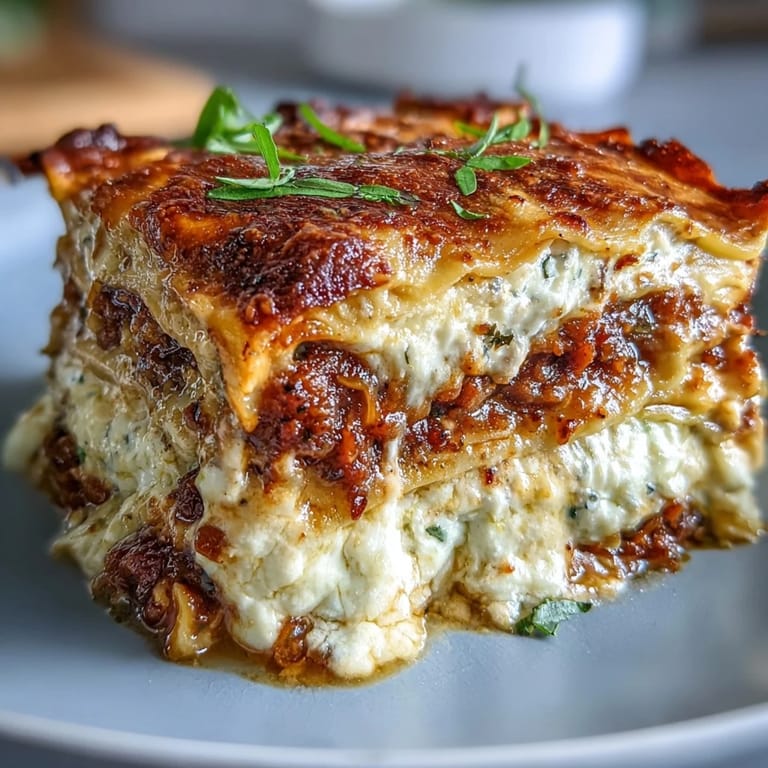
Save There was an afternoon when my partner came home early and the smell hit them at the door—they stood in the kitchen for a moment before saying anything, just breathing it in. That's when I realized this dish had become more than efficiency; it had become comfort, the kind that announces itself through the house before anyone even takes a bite.
Why This Works as a One-Pan Meal
Using an ovenproof pan for both stovetop and oven cooking saves time and dishes, but more importantly, it means all the layering happens in the same vessel—no transferring, no extra surfaces to clean. The depth of the pan matters; you need at least 5 centimeters so the layers have room to soften and meld without spilling over. I learned this the hard way with a shallow pan that nearly erupted mid-bake, teaching me to always check the pan dimensions before starting.
Making It Your Own
This recipe is flexible enough to adapt to whatever you have in the vegetable drawer. Swapping courgettes for spinach, mushrooms for lentils, or adding a splash of red wine transforms it into something slightly different each time while keeping the essential character intact. The smoked paprika and béchamel are what make it recognizably this dish, but everything else can shift with seasons and moods.
Storage, Reheating, and Vegan Swaps
This lasagne actually improves on the second day once all the flavors have had time to settle and intensify—cover leftovers and refrigerate for up to three days, or freeze for up to three months before baking. Reheat gently in a 160°C oven covered with foil until warmed through, which takes about 20 minutes from cold. For a vegan version, swap butter for coconut oil or vegan butter, use unsweetened oat or almond milk, and nutritional yeast mixed with breadcrumbs creates a surprisingly convincing topping.
- Serve alongside a sharp green salad dressed with lemon to cut through the richness.
- Garlic bread on the side transforms this into an evening that feels genuinely special.
- A glass of something with tannins—red wine or even a dry cider—pairs beautifully with the smoky, earthy flavors.
 Save
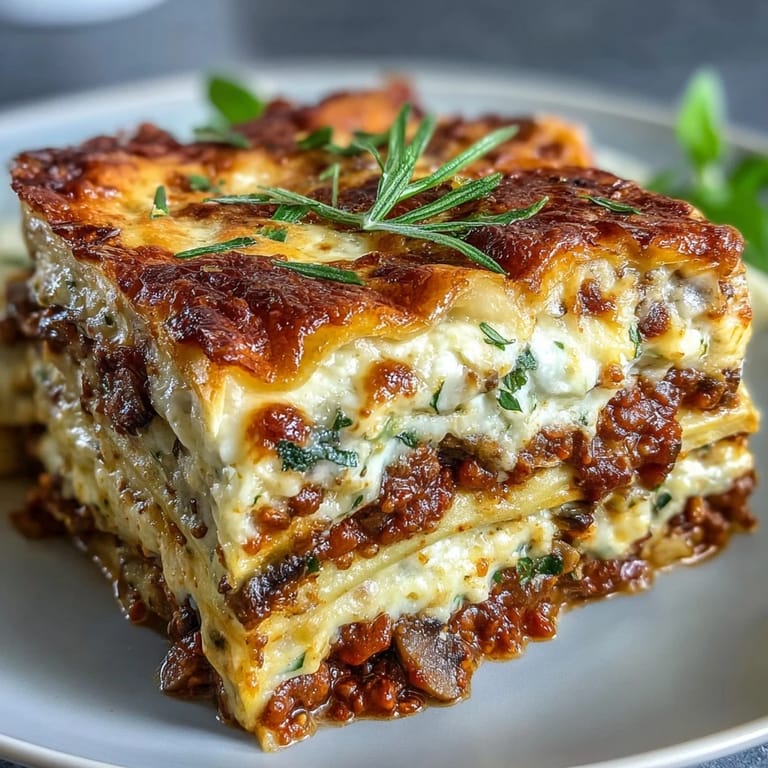
Save This is the kind of dish that proves you don't need complicated techniques or endless ingredients to feed people well—sometimes it's just about choosing good ones and giving them time to become something greater together. Make it on a night when you need to feel capable and generous without exhaustion, and watch how quickly it becomes a favorite.
Recipe FAQs
- → Can I make this ahead of time?
Yes, assemble the entire dish up to 24 hours in advance and refrigerate covered. Add 10-15 minutes to the baking time if cooking from cold. You can also freeze the assembled uncooked lasagne for up to 3 months.
- → What type of lentils work best?
Red lentils are ideal because they break down during cooking, creating a thick, hearty texture similar to traditional meat-based ragu. Brown or green lentils will hold their shape but work fine if that's what you have on hand.
- → Can I use regular lasagne sheets instead of no-boil?
Regular lasagne sheets work perfectly—just boil them according to package directions before layering. You may need slightly less béchamel sauce since pre-cooked noodles won't absorb as much liquid during baking.
- → How do I know when it's done baking?
The lasagne is ready when the cheese topping is golden and bubbling, and you can see the sauce actively bubbling around the edges. The pasta should be tender when pierced with a knife—about 35-40 minutes total baking time.
- → What can I serve with this?
A crisp green salad with vinaigrette cuts through the richness beautifully. Garlic bread, roasted vegetables, or a simple caprese salad also complement the Italian flavors. For a lighter meal, serve with steamed broccolini or asparagus.
- → Can I add extra vegetables?
Absolutely—spinach, chopped aubergine, or diced butternut squash all work well. Add heartier vegetables like aubergine or squash when sautéing the other vegetables. Stir in fresh spinach just before assembling so it wilts without becoming watery.