 Save
Save There's something quietly satisfying about opening your fridge on a Tuesday and finding exactly what you need to eat without the usual scramble. I discovered these power bowls during a particularly chaotic work season when my lunch options had narrowed to either sad desk salads or overpriced takeout containers. Now they're my secret weapon for staying fed, energized, and honest with myself about nutrition all week long.
My friend Sarah watched me pack five identical bowls one afternoon and asked if I'd given up on variety. By Wednesday when she tried one, she understood—there's freedom in knowing exactly what's coming, and there's elegance in simplicity when it's done right. Now she makes her own batch every Sunday, and we text about dressing recipes like other people compare vacation photos.
Ingredients
- Cooked quinoa (2 1/2 cups): It absorbs the dressing without getting mushy, and it holds up beautifully through the week if you let it cool completely first.
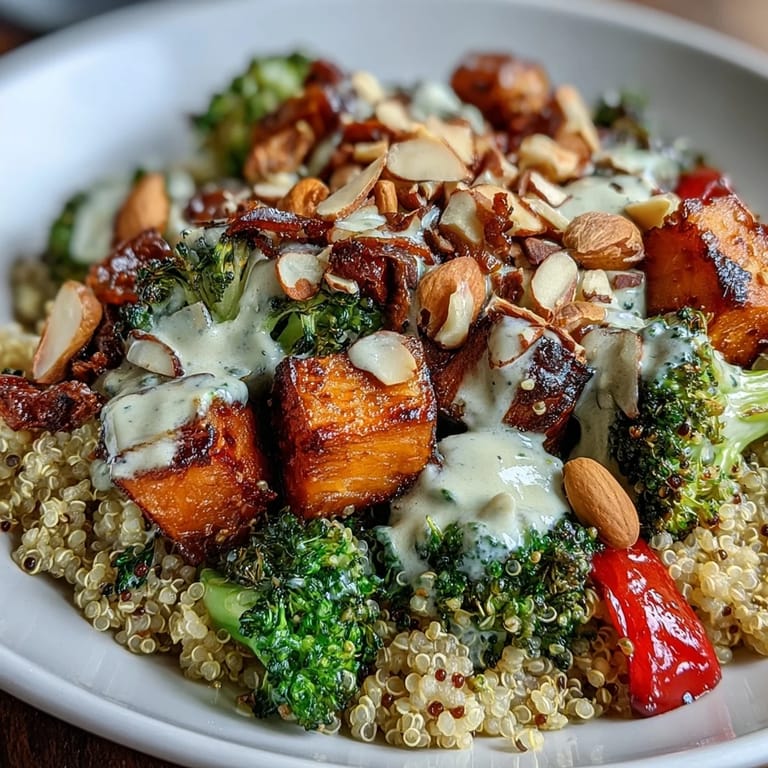
- Sweet potato and broccoli: Roasting transforms them into something almost caramelized and chewy—way better than raw.
- Red bell pepper (1): Adds brightness and sweetness; chop it small enough that it mingles with everything.
- Olive oil, sea salt, black pepper: For roasting the vegetables until they're golden and slightly charred at the edges.
- Cherry tomatoes and cucumber (1 cup each): Keep these fresh and unroasted so they stay crisp when you eat them later in the week.
- Baby spinach or kale (1 cup, chopped): If you use kale, massage it gently with a tiny bit of the dressing the night before to soften it.
- Red onion (1/4 cup, thinly sliced): It mellows slightly over a few days and adds a gentle bite that keeps things interesting.
- Black beans and chickpeas (1 1/2 cups each): These are your protein anchor—they stay firm and don't turn to mush like some legumes do.
- Roasted almonds, pumpkin seeds, sunflower seeds: The crunch matters; add these just before eating so they don't soften.
- Tahini (1/4 cup): Buy the creamy kind without added sugar, and whisk it well so there are no stubborn lumps hiding at the bottom.
- Lemon juice and maple syrup: These balance each other—the brightness and the sweetness—so taste as you go.
- Garlic, cumin, salt, pepper: Mince the garlic finely so it distributes evenly through the dressing instead of creating little spicy pockets.
Tired of Takeout? 🥡
Get 10 meals you can make faster than delivery arrives. Seriously.
One email. No spam. Unsubscribe anytime.
Instructions
- Set your oven and prep:
- Preheat to 425°F and line a baking sheet with parchment paper. This prevents sticking and makes cleanup almost fun.
- Toss the vegetables:
- In a bowl, combine diced sweet potato, broccoli florets, and chopped red bell pepper with 2 tablespoons of olive oil, sea salt, and black pepper. Spread everything in a single layer on the baking sheet—don't crowd them or they'll steam instead of roast.
- Roast until golden:
- Slide into the oven for 25 to 30 minutes, stirring once halfway through. You're looking for tender vegetables with slightly caramelized edges that smell almost nutty. Let them cool while you prep the rest.
- Cook your quinoa:
- If using dry quinoa, follow package instructions and let it cool completely. This matters because warm grains will soften everything else in the bowl.
- Make the tahini dressing:
- Whisk together tahini, lemon juice, water, maple syrup, minced garlic, and cumin in a small bowl until creamy and smooth. The water helps thin it out so it drizzles instead of gluing everything together—add more if needed. Taste and adjust salt and pepper until it feels balanced.
- Assemble your containers:
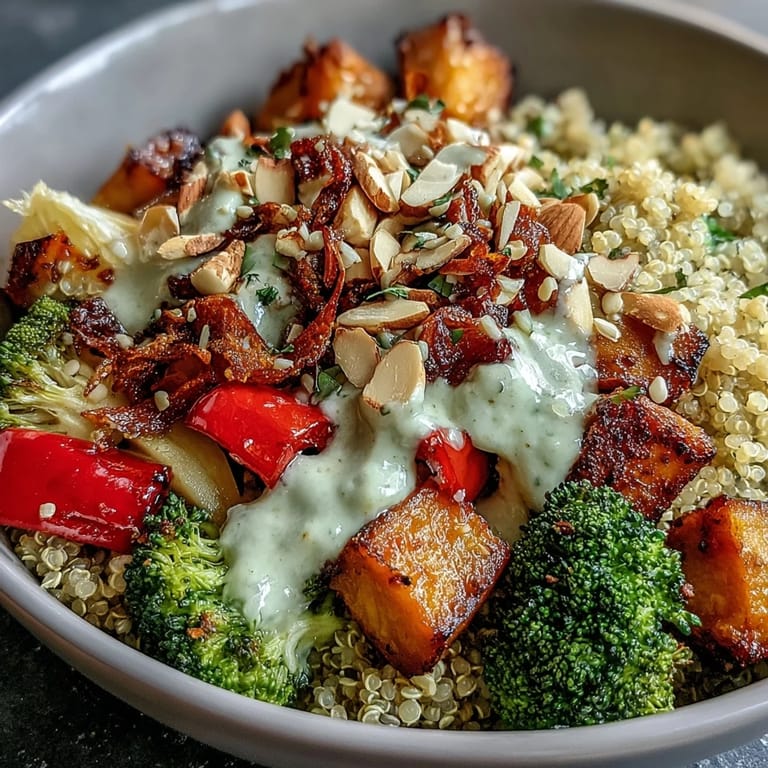
- Layer each meal prep container with 1/2 cup quinoa, a generous portion of roasted vegetables, then a mix of fresh tomatoes, cucumber, greens, and red onion. Add 1/3 cup black beans and 1/3 cup chickpeas, then scatter almonds, pumpkin seeds, and sunflower seeds on top.
- Dress strategically:
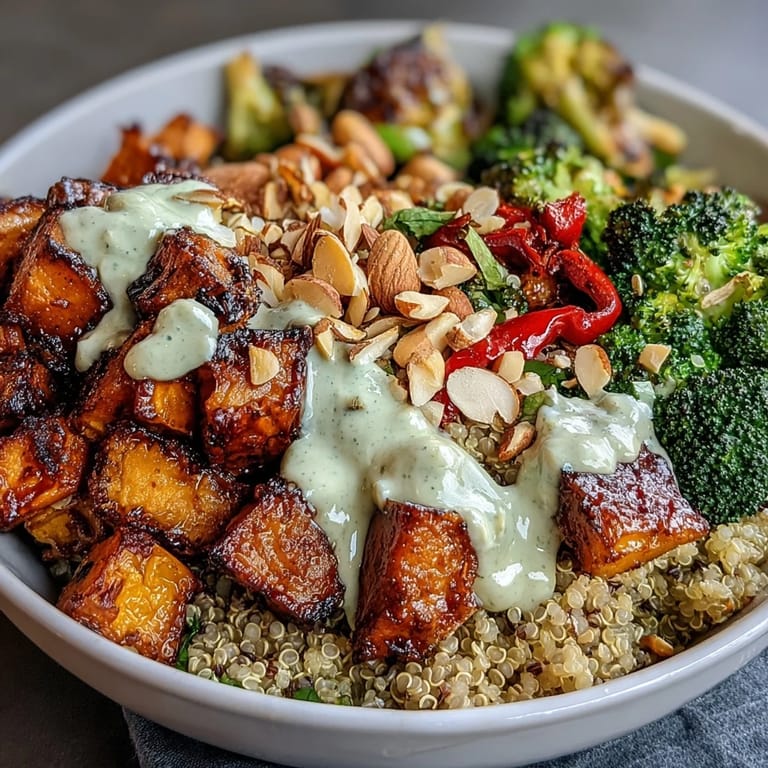
- Drizzle the tahini dressing over each bowl just before eating, or pack it separately in tiny containers so the greens stay crisp. This is the difference between a bowl that lasts five days and one that gets soggy by Wednesday.
 Save
Save I brought one of these bowls to a lunch with colleagues who usually order delivery, and watching them genuinely enjoy something I'd assembled from my kitchen felt unexpectedly good. It became the thing people asked about instead of making small talk about the weather.
Customizing Your Bowl
The beauty of this bowl is that it's a template, not a mandate. I've swapped in roasted cauliflower, shredded carrots, zucchini sliced thin and roasted until slightly crispy, and even leftover roasted beets when I had them. Summer versions use more raw vegetables and lighter quantities of grains; winter versions go heavier on roasted vegetables and beans. Trust your instincts and your pantry.
Grains Beyond Quinoa
While quinoa is lovely, I've made these bowls with farro for a chewier texture, brown rice for earthiness, and wild rice when I wanted something that felt fancier. Farro holds up especially well through the week without becoming mushy, and brown rice has a deeper flavor that plays nicely with the tahini dressing.
Making It Richer
Some days call for extra richness, and that's when I add crumbled feta cheese or sliced avocado just before eating. The dressing becomes less important when you've got creaminess from cheese or fruit, so dial back the tahini if you go this direction. A drizzle of good olive oil also transforms the bowl into something that feels more indulgent without changing the actual ingredients.
- Slice avocado thinly and add it just before eating so it doesn't brown.
- Crumbled feta stays fresher when stored separately and scattered on top at mealtime.
- If you're adding cheese or avocado, you might skip the tahini entirely or use just a whisper of it.
 Save
Save Five days of lunch sorted, zero regret, and room to be creative—this bowl became my small rebellion against decision fatigue. Now it's just part of how I feed myself well.
Recipe FAQs
- → How long do these bowls keep in the refrigerator?
These bowls stay fresh for up to 5 days when stored properly in airtight containers. For the best texture, keep the tahini dressing separate and drizzle it over just before eating. The roasted vegetables and quinoa hold up beautifully throughout the week.
- → Can I freeze these bowls?
Freezing isn't recommended as the fresh vegetables (cucumber, tomatoes, spinach) become mushy when thawed. However, you can freeze the roasted vegetables and quinoa separately for up to 3 months, then add fresh ingredients when ready to serve.
- → What grains work well as quinoa alternatives?
Brown rice, farro, wheat berries, or even millet make excellent substitutes for quinoa. Keep in mind that cooking times vary—brown rice takes about 45 minutes, while farro needs 25-30 minutes. Use the same volume as the quinoa in this recipe.
- → How can I add more protein to these bowls?
These bowls already provide 16 grams of protein per serving from the quinoa and beans. For extra protein, add grilled chicken, hard-boiled eggs, cubed tofu, or crumbled feta cheese. You could also increase the portion of beans or add hemp seeds to the topping mix.
- → Can I make the tahini dressing ahead of time?
Absolutely! The tahini dressing keeps well in the refrigerator for up to 1 week in a sealed jar. It may thicken when cold—simply whisk in a teaspoon of water at room temperature to reach your desired consistency again.
- → What vegetables can I use in different seasons?
In spring, try asparagus and peas. Summer works well with zucchini, corn, and bell peppers. Fall is perfect for butternut squash and Brussels sprouts. Winter offers cauliflower, carrots, and kale. Adjust roasting times as needed—harder vegetables take longer than softer ones.