 Save
Save My sister texted me a photo of pastel eggs scattered across her kitchen counter last March, asking if I could make something festive for her Easter brunch that wouldn't take all morning. I'd never made chocolate bark before, but something about the simplicity appealed to me—just melted chocolate, candy, and whatever colorful bits I could find. Two hours later, I was breaking apart shards of it while she laughed at how unevenly I'd swirled the colors, and honestly, the imperfection made it taste better.
There's something about making chocolate bark during spring that shifts your entire mood. I was standing at my kitchen counter on a gray afternoon, microwaving white chocolate in bursts, and suddenly the whole counter was covered in pastels—pink, yellow, blue, purple melts in tiny bowls like a painter's palette. My neighbor stopped by unexpectedly, and instead of rushing to clean up, I just handed her a piece still warm from the fridge. She went home with half the batch and a request for the recipe.
Ingredients
- White chocolate, chopped or chips (300 g): This is your foundation, so don't reach for the cheap stuff—it affects how smoothly everything melts and sets, and honestly, it's the difference between bark that shatters beautifully and bark that breaks into sad shards.
- Pastel-colored candy melts (50 g total, in pink, yellow, blue, purple): These melt easier than chocolate and hold their colors without fading, which means your swirls stay bright instead of muddying into brown.
- Mini Cadbury eggs, roughly chopped (120 g): Chop them just before assembling so the pieces stay distinct and don't get lost in the chocolate base.
- Pastel-colored sprinkles (2 tbsp): These add visual pop and a little crunch, but use them sparingly or they'll overpower the chocolate flavor.
- Mini marshmallows, optional (30 g): If you add these, press them in gently right after the sprinkles so they don't sink during chilling.
Tired of Takeout? 🥡
Get 10 meals you can make faster than delivery arrives. Seriously.
One email. No spam. Unsubscribe anytime.
Instructions
- Line and prepare your workspace:
- Tear off a piece of parchment paper that's big enough to cover your baking sheet with a little overhang on all sides—this makes the final breaking and lifting so much easier.
- Melt the white chocolate base:
- Chop your white chocolate into smaller pieces if you're starting with a bar, then microwave in 30-second bursts, stirring after each one. You're looking for smooth and glossy, not split and separated, so patience here matters more than you'd think.
- Melt your candy colors separately:
- Use individual bowls for each pastel shade and follow the package instructions—usually it's 30-second bursts on medium power. Having them all ready before you spread the white chocolate is the only way this works without panic.
- Spread the white chocolate foundation:
- Pour the melted white chocolate into the center of your parchment and use a spatula to nudge it into a rough rectangle about half an inch thick. Don't stress about perfect edges—the uneven, organic look is actually the point here.
- Create your marbled effect:
- Drizzle each pastel color over the white chocolate in loose, random patterns, then take a toothpick or skewer and gently drag it through the colors in figure-eight motions to create that swirled marbling effect. Stop before you overwork it—a few swirls look intentional, constant stirring just turns everything muddy.
- Add toppings while chocolate is still wet:
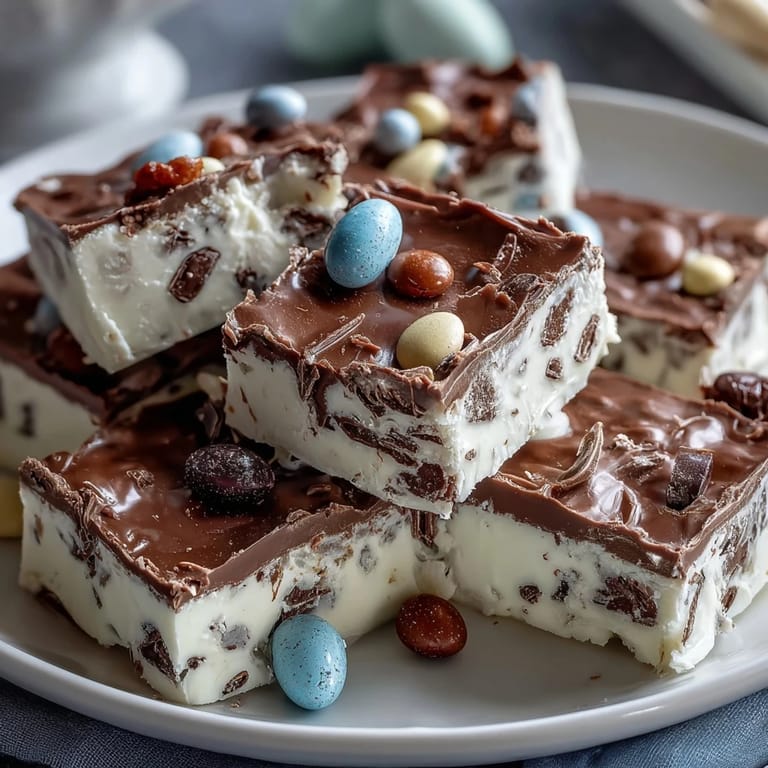
- Sprinkle your chopped Cadbury eggs, pastel sprinkles, and marshmallows all over the surface immediately, while the chocolate is still soft and sticky. This is where the whole thing becomes irresistible to look at.
- Press toppings into place:
- Gently press everything down with your fingers or the back of a spoon so the pieces embed themselves into the chocolate and don't just sit on top waiting to fall off when you break into it.
- Chill until set:
- Slide the whole baking sheet into the refrigerator for at least 30 minutes—this is when the magic happens and everything bonds together. You'll know it's ready when the chocolate feels firm and doesn't leave fingerprints.
- Break and serve:
- Use a sharp knife or just your hands to break the bark into irregular pieces, which somehow always taste better than neat cuts.
 Save
Save Easter morning with my sister's family is when this bark finally made sense to me. The kids found pieces hidden among the regular candy, and instead of just eating them, they showed each other like they'd discovered treasure. That's when I realized this wasn't just about chocolate—it was about creating a moment where something handmade felt special enough to remember.
Why This Works for Celebrations
There's a reason this bark appeared on every Easter dessert table I've seen since—it photographs beautifully without any special skills, tastes indulgent while being genuinely easy to make, and somehow feels more thoughtful than store-bought sweets. The pastel colors automatically put people in a festive mood, even if they're skeptical about homemade chocolate at first. I've learned that presentation matters, and breaking the bark into uneven pieces instead of cutting perfect rectangles makes people want to eat more of it.
Storage and Keeping It Fresh
Keep your finished bark in an airtight container in the refrigerator, and it'll stay perfect for up to two weeks, though I've never had any last that long. If the kitchen is warm or it's sitting out, the chocolate can start softening at the edges, so store it cold and only bring out pieces as needed. On humid days, the parchment paper sometimes sticks a bit, but a quick warm knife around the edges fixes that without any damage.
Flavor Variations and Swaps
After making this with white chocolate, I started experimenting with dark chocolate for a richer, less sweet version that feels more grown-up, and milk chocolate for something in between. You can also add chopped pistachios or almonds for extra crunch, swap the Cadbury eggs for other pastel candies, or drizzle it with dark chocolate if you want contrast. The beauty is that you can't really mess this up once you understand the basic technique—the only limit is what toppings your guests love.
- Toast nuts before adding them if you want them to taste deeper and more intentional.
- Make this a day ahead so you're not stressing about timing on the day you need to serve it.
- Double the recipe if you're feeding more than a few people, because bark disappears faster than you expect.
 Save
Save This bark has become my go-to when I need something festive that feels personal without demanding hours in the kitchen. Make it once and you'll understand why it's worth keeping in your rotation.
Recipe FAQs
- → What types of chocolate work best for this bark?
White chocolate provides a smooth, sweet base, but milk or dark chocolate can be used for richer flavors.
- → How do I achieve the marbled pastel effect?
Drizzle melted pastel candy melts over the white chocolate and gently swirl with a toothpick or skewer before toppings.
- → Can I add nuts or other toppings?
Yes, chopped pistachios or almonds add crunch and complement the sweetness nicely.
- → How long should the bark chill to set properly?
Chill in the refrigerator for at least 30 minutes or until completely firm before breaking into pieces.
- → What is a good beverage pairing with this treat?
A light, sweet Moscato d'Asti complements the pastel chocolate bark beautifully.
- → Are there common allergens in this bark?
Contains milk, soy, eggs, and possibly nuts or gluten depending on candy brands, so check labels carefully.