 Save
Save There's something about a bowl that feels like permission to eat well without overthinking it. I stumbled onto this veggie and quinoa combo on a Tuesday afternoon when my fridge was overflowing with vegetables I'd bought with good intentions but never quite used. Instead of letting them wilt into regret, I tossed them on a sheet pan, cooked some quinoa, and suddenly had something that tasted intentional, colorful, and genuinely nourishing. It became my go-to move whenever I needed to feel grounded again.
I made this for friends who claimed they didn't eat enough vegetables, and watching them finish every bite while chatting and laughing made me realize how much of eating well is just about making something that doesn't feel like punishment. One of them asked for the recipe the next day, and I knew I'd cracked something.
Ingredients
- Quinoa, rinsed (1 cup): This ancient grain absorbs flavor beautifully and has a gentle, slightly nutty taste—rinsing removes bitterness and helps each grain stay fluffy.
- Water or vegetable broth (2 cups): Broth adds depth that plain water can't match, though either works; the ratio here keeps things perfectly tender without mushiness.
- Red bell pepper, diced (1 medium): The sweetness intensifies when roasted, and the bright color is half the appeal of a beautiful bowl.
- Zucchini, sliced (1 medium): This becomes creamy when roasted rather than watery, especially if you slice it on the thicker side.
- Carrot, sliced (1 medium): The natural sugars caramelize into something almost candy-like, giving the bowl texture and subtle sweetness.
- Red onion, cut into wedges (1 small): Raw red onion is sharp, but roasting mellows it into something sweeter and more approachable.
- Cherry tomatoes, halved (1 cup): These burst slightly in the oven and release their juices into the pan, creating tiny flavor pockets throughout.
- Olive oil for roasting (2 tablespoons): Just enough to help vegetables caramelize without oversaturating them.
- Dried oregano (1 teaspoon): This herb bridges all the vegetables together and whispers rather than shouts.
- Salt and black pepper: Season generously at every stage—it makes all the difference between flat and vibrant.
- Black beans or chickpeas, drained and rinsed (1 can, 400 g): Either works, though chickpeas hold their shape better; rinsing removes excess sodium and starch.
- Roasted almonds or walnuts, chopped (1/4 cup): These add crunch and a subtle richness that keeps the bowl from feeling too light.
- Pumpkin seeds (2 tablespoons): They're packed with minerals and provide a different kind of crunch than nuts, plus they look beautiful scattered on top.
- Extra virgin olive oil for vinaigrette (3 tablespoons): Use your best oil here since it's raw; it makes a noticeable difference in flavor.
- Fresh lemon juice (2 tablespoons): Freshly squeezed is worth the small effort—bottled tastes tinny by comparison.
- Dijon mustard (1 teaspoon): This acts as an emulsifier and adds a subtle tang that ties everything together.
- Maple syrup or honey (1 teaspoon): Just a whisper of sweetness to balance the acidity and bring harmony to the dressing.
- Garlic clove, minced (1 small): Finely minced raw garlic becomes almost creamy in the dressing rather than harsh.
Tired of Takeout? 🥡
Get 10 meals you can make faster than delivery arrives. Seriously.
One email. No spam. Unsubscribe anytime.
Instructions
- Heat your oven and prep the vegetables:
- Set the oven to 425°F and while it warms, cut your vegetables into pieces that are roughly the same size—this matters more than you'd think for even cooking. The bell pepper, carrot, and zucchini should all be able to caramelize at the same pace.
- Toss and roast:
- Tumble everything onto a sheet pan, drizzle with oil, scatter your oregano, season boldly with salt and pepper, and make sure each piece gets coated. Slide it into the oven and set a timer for 12 minutes to stir everything around—this prevents any one vegetable from sticking and ensures even browning on all sides.
- Start the quinoa:
- While vegetables roast, rinse your quinoa under cold water until the water runs clear, which takes about a minute and prevents that bitter taste. Combine with water or broth in a saucepan, bring it to a boil, then lower the heat, cover, and let it simmer gently for 15 minutes without peeking.
- Let the quinoa rest:
- Once the liquid is absorbed, remove from heat, keep the lid on, and let it sit for 5 minutes—this final rest keeps the grains tender and fluffy. Fluff gently with a fork and set aside.
- Whisk the vinaigrette:
- In a small bowl, whisk the olive oil, lemon juice, mustard, sweetener, and minced garlic until it emulsifies into something silky and cohesive. Taste it and adjust the seasoning until it sings on your tongue—it should be bright, balanced, and make you want to pour it on everything.
- Assemble with intention:
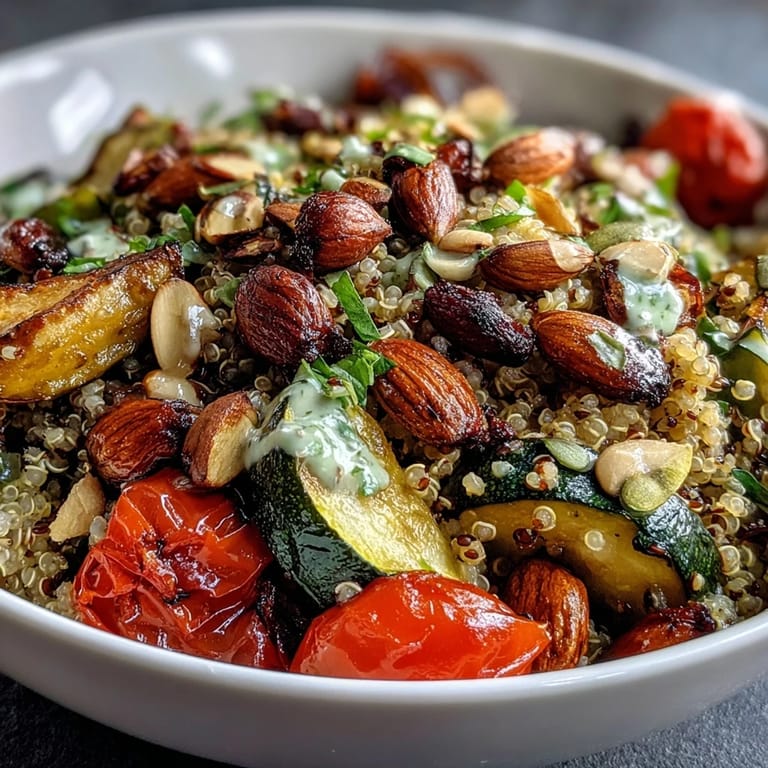
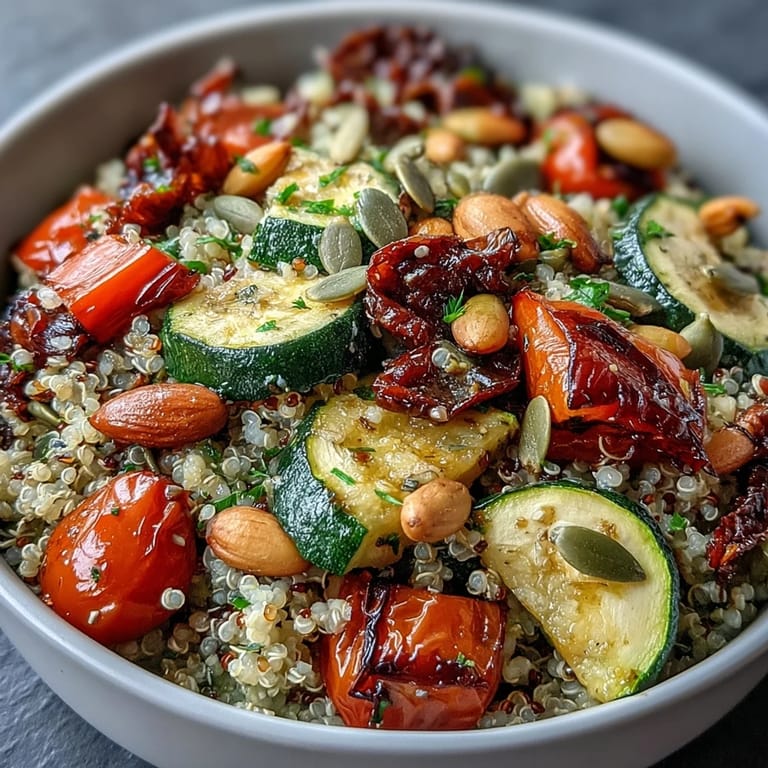
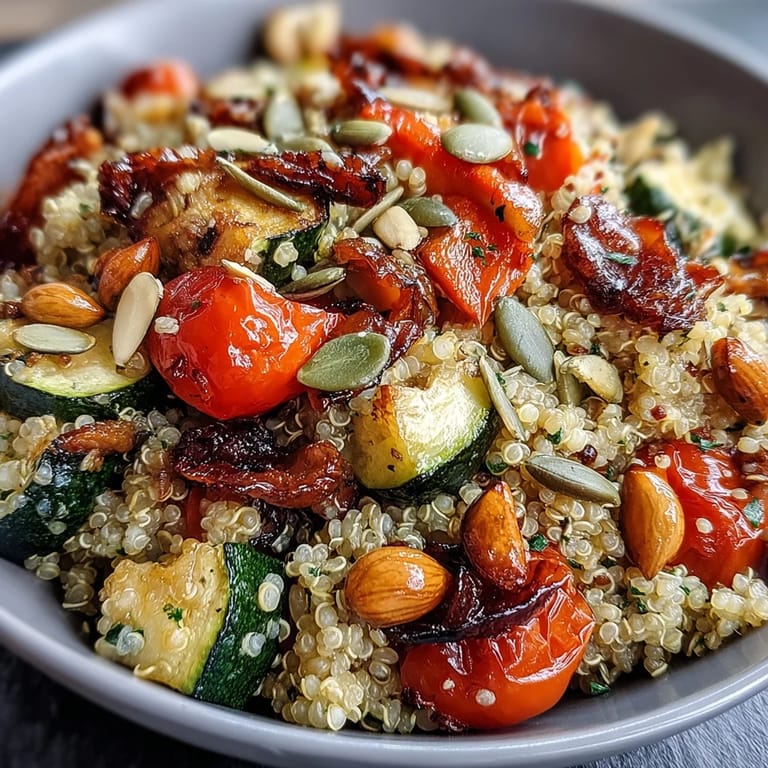
- Divide the fluffy quinoa among four bowls as your base, then arrange the warm roasted vegetables on top like you're creating something intentional. Scatter the beans, nuts, and seeds in a way that makes you want to eat it, then drizzle the vinaigrette over everything just before serving.
- Serve or store:
- This tastes wonderful warm, but if you're making it ahead, refrigerate and enjoy it cold—the flavors actually deepen overnight as everything gets to know each other. Either way, give it a gentle toss just before eating to redistribute all those golden roasted pieces.
 Save
Save This bowl once saved a dinner party when a guest mentioned being newly vegetarian and slightly worried about it. Watching someone discover that eating plants could actually be delicious and satisfying was a reminder that sometimes the most important thing a recipe can do is expand someone's sense of what's possible.
Vegetables You Can Swap In (And Should)
The beauty of this bowl is that it genuinely adapts to whatever season you're in and whatever your crisper drawer contains. Roasted broccoli and cauliflower add earthiness, sweet potato brings warmth, Brussels sprouts get crispy at the edges and creamy inside, and asparagus cooks so quickly it barely needs the full roasting time. I've even tossed in diced eggplant when I had it on hand, and it soaked up the oil and seasonings like a sponge. The only rule is that you're roughly matching the size of your cuts so everything finishes cooking at the same moment.
Making It More Substantial
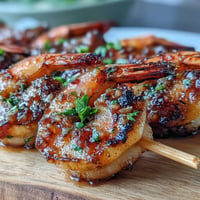
Some days this bowl is exactly right as it is, but other days I want it to feel more like dinner—something that sticks with you. A poached egg on top becomes its own sauce when the yolk breaks into the warm quinoa, while crumbled feta adds creaminess without needing to be heavy. Grilled tofu cut into cubes picks up the flavors beautifully, and if you're not vegetarian, grilled chicken or shrimp both integrate seamlessly. The vinaigrette is forgiving enough that any of these additions taste like they were always meant to be there.
The Vinaigrette Is Everything
I used to think of dressing as optional, something you drizzle if you remembered, but this one is where the bowl actually comes alive. The mustard acts almost invisibly, just making everything taste more like itself, while the lemon juice keeps things bright and the touch of sweetness prevents it from being one-note sharp. It's the kind of vinaigrette that tastes almost creamy even though there's no cream in it—the emulsification of the oil and lemon juice does that all on its own.
- Make extra vinaigrette and keep it in a jar in your fridge; it lasts days and transforms other bowls, salads, or roasted vegetables instantly.
- If you're sensitive to raw garlic, mince it finely or even skip it—the dressing works beautifully either way.
- For a creamier consistency, add a tablespoon of tahini or Greek yogurt, which rounds out the flavors and makes it feel like a proper meal in a bowl.
 Save
Save This bowl has become one of those recipes that I reach for when I need to feed myself well without fuss, and somehow it never gets boring. Every time you make it, you'll find yourself tweaking it slightly—different vegetables, an extra sprinkle of something, a squeeze more lemon—and that's exactly how it should be.
Recipe FAQs
- → Can I make this bowl ahead of time?
Yes, this bowl stores exceptionally well. Keep the quinoa, roasted vegetables, and beans in separate containers for up to 4 days. Add the nuts and vinaigrette just before serving to maintain crunch and freshness.
- → What vegetables work best for roasting?
Hard vegetables like sweet potatoes, broccoli, cauliflower, and Brussels sprouts work beautifully alongside the bell peppers and zucchini. Just adjust roasting time slightly—denser vegetables may need an extra 5-10 minutes.
- → How do I prevent quinoa from being mushy?
Rinse quinoa thoroughly before cooking to remove bitter saponins. Use a 1:2 ratio of quinoa to liquid, and let it rest covered for 5 minutes after cooking before fluffing. This ensures each grain remains distinct and fluffy.
- → Can I add protein beyond beans?
Grilled tofu, roasted chickpeas, or a poached egg all make excellent protein additions. For non-vegetarian options, grilled chicken or shrimp pair wonderfully with the lemon vinaigrette and roasted vegetables.
- → Is the vinaigrette customizable?
Absolutely. Try adding fresh herbs like basil or parsley, swap lemon for lime juice, or use honey instead of maple syrup. The basic ratio of 3 parts oil to 1 part acid with mustard creates an emulsified base that adapts well to variations.