 Save
Save There was this Tuesday afternoon when I stood in my kitchen staring at a pile of zucchini from the farmers market, wondering how to transform them into something that didn't feel like penance. My neighbor had just dropped off a spiralizer she'd used once, and I remembered a stir-fry I'd eaten at a small restaurant in Portland where the noodles were somehow both delicate and satisfying. That's when this dish clicked into place, and now it's become my go-to when I want something that feels indulgent but actually nourishes me.
I made this for my sister during one of those spring evenings when we both needed to eat something bright and honest. She was going through a phase of rethinking her diet, and I remember watching her face light up when she twirled the first forkful of zucchini noodles around her chopstick. She asked for the recipe immediately, and now she texts me photos of her versions with different vegetables and proteins added in. That's when I knew it wasn't just my comfort food anymore, it was becoming something we shared.
Ingredients
- Zucchini (4 medium, spiralized): The foundation here, and honestly they're best when spiralized fresh rather than sitting in the fridge waiting to be cooked, otherwise they'll weep water everywhere and turn into mush.
- Red bell pepper (1 large, sliced): This adds sweetness and color, and I always slice it thick enough that it keeps a little snap when you bite into it.
- Carrot (1 large, julienned): Thin ribbons cook fast and catch the sauce beautifully, much better than chunks.
- Snap peas (1 cup, halved): They stay crisp if you don't overcook them, and they add a subtle sweetness that rounds out the peanut sauce.
- Green onions (2, sliced): Raw at the end they're sharp and fresh, which cuts through the richness of the peanut sauce.
- Fresh cilantro (2 tablespoons, optional): If you're someone who loves it, don't skip this, it brightens everything.
- Natural peanut butter (1/3 cup): Use the kind without added sugar or oil if possible, it tastes cleaner and the sauce tastes more like itself.
- Soy sauce or tamari (2 tablespoons, low-sodium): This is your umami backbone, tamari if you're keeping things gluten-free.
- Rice vinegar (1 tablespoon): The acidity keeps the sauce from being one-note and heavy.
- Lime juice (1 tablespoon): Fresh squeezed only, bottled lime juice is a different thing entirely and it shows.
- Maple syrup or honey (1 tablespoon): Just enough sweetness to balance the salty and tangy, but not so much that it becomes dessert.
- Toasted sesame oil (2 teaspoons): This is liquid gold and a little goes a long way, don't skip the toasted kind it has way more flavor.
- Garlic and ginger (2 cloves and 1 teaspoon respectively): Mince them fine so they disappear into the sauce and perfume every bite.
- Warm water (2 to 4 tablespoons): You'll add this gradually to get the sauce to the right consistency, it should pour but not be soupy.
- Red pepper flakes (1/2 teaspoon, optional): For heat if you want it, I usually add them because they remind you you're eating something alive.
- Roasted peanuts (2 tablespoons, chopped): Crushed just before serving so they stay crunchy and add that textural contrast.
Tired of Takeout? 🥡
Get 10 meals you can make faster than delivery arrives. Seriously.
One email. No spam. Unsubscribe anytime.
Instructions
- Get everything prepped and ready:
- Spiralize your zucchini and carrot, slice the bell pepper and snap peas, and mince your garlic and ginger, have it all sitting in bowls before you touch the stove. This is a quick cook, so you won't have time to stop and chop things mid-way.
- Build the peanut sauce:
- Whisk the peanut butter with soy sauce, rice vinegar, lime juice, maple syrup, sesame oil, garlic, and ginger in a bowl, then add warm water a tablespoon at a time until it's smooth and pourable like salad dressing. Taste it at this point, it should make your mouth water a little, tangy and savory and rich all at once.
- Heat your skillet until it's really hot:
- Medium-high heat is what you want, and you can add a splash of sesame oil if you want extra flavor threading through everything. The pan needs to be hot enough that the vegetables cook quickly and stay crisp instead of steaming.
- Cook the harder vegetables first:
- Toss in the bell pepper, carrot, and snap peas and let them sizzle for about 2 to 3 minutes, stirring every few seconds so they cook evenly. They should still have a little resistance when you bite into them, not soft.
- Add the zucchini noodles gently:
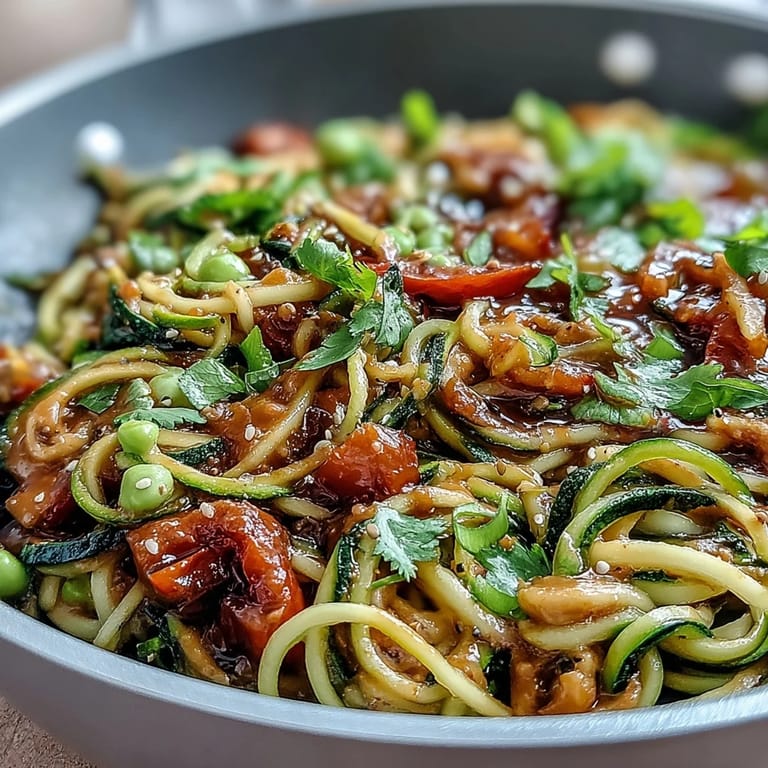
- This is where you have to be gentle because zucchini noodles are delicate and they release moisture when they're overworked. Just toss them in and cook for 2 to 3 minutes until they're heated through but still have a little body to them.
- Pour the sauce and finish:
- Pour all that peanut sauce over everything and toss until every noodle is coated, cook for another minute or two just until it's all warm together. Remove from heat immediately or you'll end up with soft sad noodles instead of the bright crisp ones you're aiming for.
- Plate and garnish:
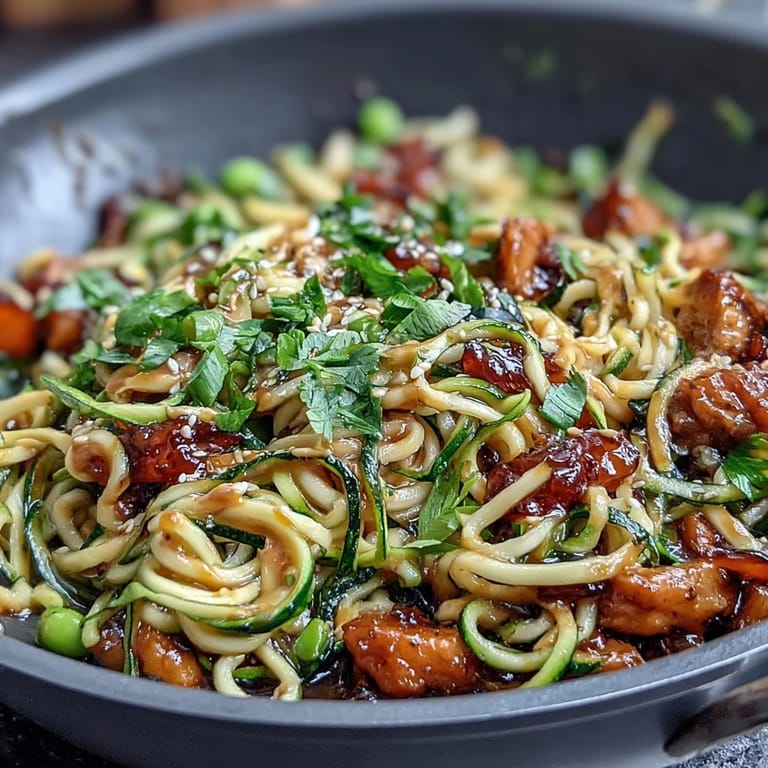
- Serve right away while it's still warm and the noodles still have some spring to them, scatter chopped peanuts and green onions and cilantro over the top.
 Save
Save What strikes me most about this dish is how it manages to feel like you're treating yourself while actually being genuinely good for you, and somehow that matters more than either thing on its own. I've watched people who swear they hate vegetables genuinely enjoy this, twirling the noodles and asking for seconds, and that's become its own kind of small magic in my kitchen.
The Magic of That Peanut Sauce
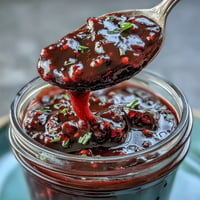
The peanut sauce is honestly where all the love lives in this dish, it's where something that could be boring becomes something you actually crave. I spent a whole evening once just tasting different ratios of peanut butter to vinegar to lime juice, and I learned that balance matters more than quantity. The sauce should make you pause and think about what you're tasting, you should be able to identify the brightness of lime, the earthiness of peanut butter, the salt from soy sauce, all playing together instead of blending into a muddy brown mess.
Ways to Make This Your Own
This dish is honestly a canvas, I've made it with grilled shrimp stirred in at the last second, with crispy tofu that I pressed the night before, with chicken that had been marinating in ginger all day. My friend added roasted chickpeas one time and it was completely different but also completely right, adding a nutty crunch that took over. The vegetables are flexible too, I've added thin sliced mushrooms, tender broccoli florets, even some shredded cabbage because I was curious how it would taste.
Timing and Temperature Matter More Than You Think
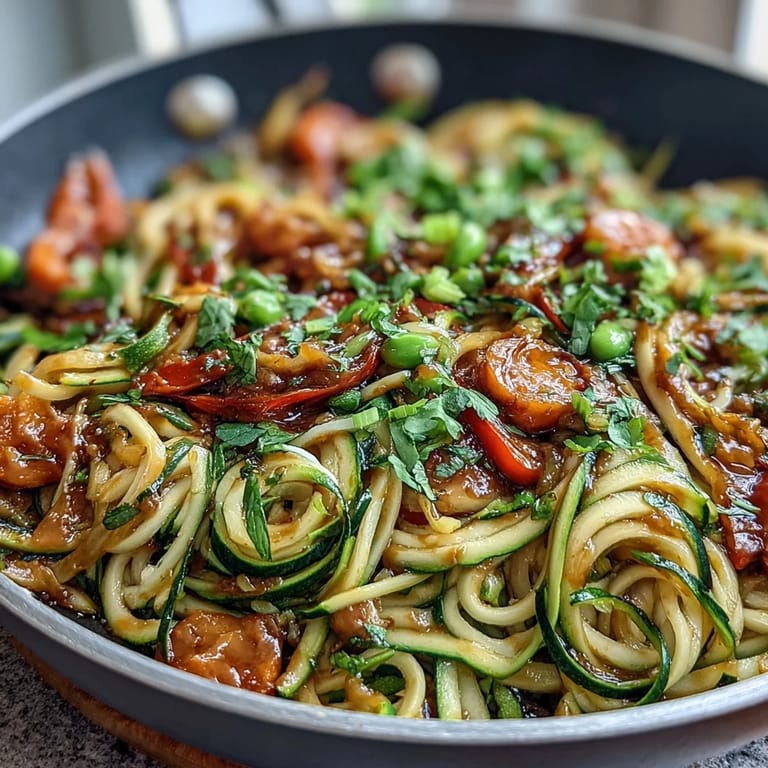
The reason this dish works at all is because you're not trying to cook everything perfectly, you're trying to cook it quickly so everything stays bright and alive. The vegetables should have personality when they hit the pan, the sauce should be warm but not boiling, and your zucchini noodles should never spend more than a few minutes over heat. I once got distracted and let the whole thing sit for ten minutes after adding the sauce, and by the time I got back to it the noodles had softened to the point of no return.
- Don't skip the warm water in the sauce, it makes the peanut butter creamy instead of thick.
- If you're adding protein, cook it separately and stir it in at the very end so it doesn't get overcooked.
- This dish is best right when you make it, so plan to eat it immediately instead of saving it for later.
 Save
Save This is one of those dishes that somehow became part of my regular rotation without me really planning for it to happen. It's the kind of food that makes you feel like you're taking care of yourself while also genuinely tasting like something worth eating.
Recipe FAQs
- → How do I prevent zucchini noodles from becoming soggy?
Cook them briefly over medium heat, tossing gently for 2-3 minutes to retain a firm texture without releasing excess water.
- → Can I substitute peanut butter for allergies?
Yes, sunflower seed butter or almond butter work well as alternatives to maintain creaminess and flavor.
- → What is the best way to spiralize the vegetables?
Use a spiralizer or a julienne peeler for even, consistent noodles and strips.
- → Can I add protein to this dish?
Grilled tofu, chicken, or shrimp make excellent additions for extra protein and heartiness.
- → How should the peanut sauce be adjusted if too thick?
Slowly mix in warm water, a tablespoon at a time, until the sauce reaches a smooth, pourable consistency.