 Save
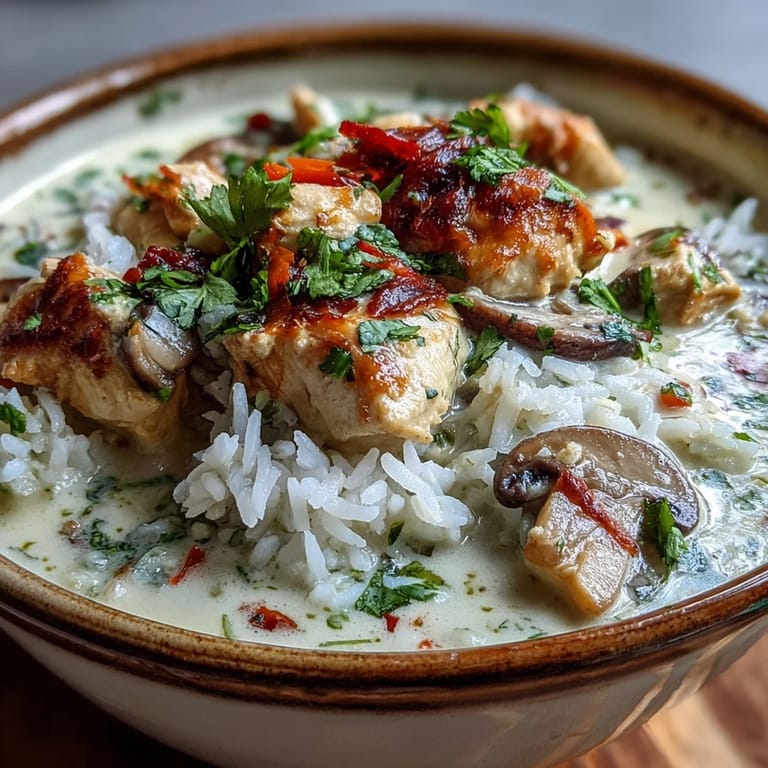
Save The first time I made this Thai coconut curry soup, I wasn't trying to recreate restaurant magic—I was just standing in my kitchen on a rainy afternoon with half a package of red curry paste and some chicken thighs that needed using up. What emerged from that pot was so comforting and aromatic that my partner asked me to make it again the next week, and then the week after. Now it's become the kind of soup I turn to when I want something that feels both restaurant-quality and entirely doable on a weeknight.
I made this soup for my sister when she was going through a rough patch, and I watched her take that first spoonful and visibly relax—her shoulders dropped, she closed her eyes for a second. She said later that the warmth and the smell of lemongrass and ginger felt like being taken care of. That's when I realized this wasn't just a recipe; it was one of those quiet gestures that says I've got you without needing many words.
Ingredients
- Boneless, skinless chicken thighs (500 g): Thighs stay tender and flavorful even when simmered, unlike breasts which can turn dry—this is the one swap that actually matters.
- Mushrooms (200 g): They soak up the curry broth like little sponges and add an earthy depth that makes the soup feel more substantial.
- Carrots (2 medium): Their natural sweetness balances the spice and heat, and they soften into tender bites without falling apart.
- Onion, garlic, and ginger: This aromatic base is where the magic starts—don't skip the sautéing step, as it wakes up all those flavors.
- Jasmine rice (120 g): It absorbs the broth and becomes silky, turning the soup into a one-pot meal rather than just a starter.
- Coconut milk (400 ml): Full-fat is non-negotiable here; it creates that luxurious texture and balances the spice beautifully.
- Chicken stock (1 liter): Use homemade if you have it, but good quality store-bought works perfectly fine.
- Red curry paste (2–3 tablespoons): Start with 2 and taste as you go—some brands are spicier than others, and you can always add more heat.
- Lemongrass and kaffir lime leaves: These are what make it taste genuinely Thai rather than just curry-flavored; don't skip them if you can find them.
- Fish sauce (1 tablespoon): It sounds intimidating, but it's the umami backbone that makes everything taste fuller and more rounded.
- Brown sugar and lime juice: These are your seasoning fine-tuners, bringing brightness and sweetness into balance at the end.
- Fresh cilantro and lime wedges: They're not optional—the fresh herbs cut through the richness and make each spoonful feel alive.
Tired of Takeout? 🥡
Get 10 meals you can make faster than delivery arrives. Seriously.
One email. No spam. Unsubscribe anytime.
Instructions
- Build your flavor base:
- Heat oil in your pot over medium heat and add the onions, garlic, and ginger, stirring until the kitchen smells like something good is about to happen. Let them soften for a couple of minutes until the raw edge fades and everything becomes fragrant and golden at the edges.
- Wake up the curry paste:
- Stir in the red curry paste and let it cook for about a minute, breaking it up so it's evenly distributed throughout the oil. You'll notice the color deepens and the smell shifts—that's your signal that it's ready to accept the other ingredients.
- Toast the chicken:
- Add the chicken thighs and stir them around so they get coated in that curry-infused oil, cooking for just 2–3 minutes. You're not trying to cook them through yet; you're just giving them a chance to pick up those flavors.
- Build the broth:
- Pour in the chicken stock and bring everything to a simmer, then add the carrots, mushrooms, lemongrass, and kaffir lime leaves if you're using them. The aroma that rises from the pot at this point is worth the price of admission alone.
- Add the rice and vegetables:
- Stir in the jasmine rice and let everything simmer uncovered for 15–20 minutes until the rice is tender and has absorbed a lot of the broth. The chicken should be cooked through by now, and the vegetables should be soft enough to easily pierce with a spoon.
- Finish with richness:
- Stir in the coconut milk, fish sauce, and brown sugar, then let it all simmer together gently for about 5 more minutes so the flavors marry. Taste as you go and adjust the seasoning with lime juice, adding more fish sauce or salt if it needs a boost.
- Garnish and serve:
- Remove the lemongrass and kaffir lime leaves, ladle the soup into bowls, and scatter fresh cilantro, sliced chili if you like heat, and a wedge of lime on top. Serve it while it's still steaming, with the lime wedge right there for squeezing at the table.
 Save
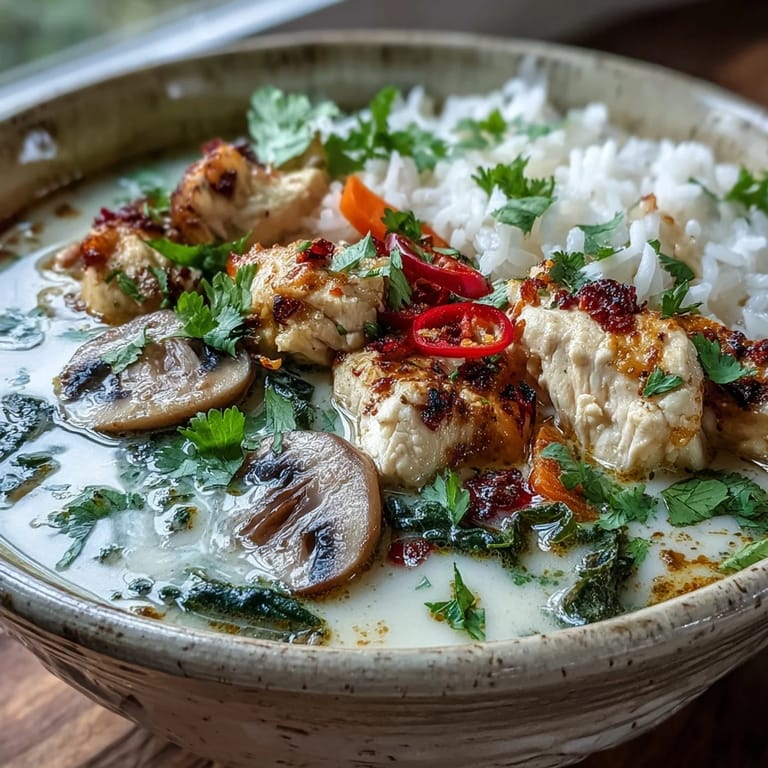
Save I've learned that this soup tastes even better the next day after the flavors have had time to settle and deepen in the fridge. There's something about reheating a bowl of it the following afternoon that makes the whole day feel a little softer and kinder.
Customizing Your Bowl
The beauty of this recipe is that it invites improvisation without falling apart. I've made it with shrimp instead of chicken on nights when I wanted something lighter, and with pressed tofu for vegetarian friends—both worked beautifully because the broth carries enough flavor that the protein is almost secondary. Bell peppers, snap peas, baby corn, or even a handful of spinach can slip into the pot in the last few minutes, and they'll absorb that coconut-curry magic just like the mushrooms and carrots do.
The Rice Question
Some people ask if you can serve this with rice on the side instead of cooking it in the pot, and yes, absolutely—but I've found that having the rice already in there changes the eating experience in a good way. The grains swell up and absorb the broth, so every spoonful has this lovely combination of liquid and substance. If you want an extra-hearty version, just add another 60 grams of rice and a bit more stock, and you've got yourself something closer to a rice porridge.
Pairing and Serving Suggestions
This soup stands on its own as a complete meal, but I love serving it alongside something simple and cool to balance the warmth and spice. A crisp white wine like Riesling cuts through the richness beautifully, or if you want to stay thematic, Thai iced tea with its sweetness and slight tannins feels like the right choice. On hot days, I've even served it at room temperature with extra fresh herbs and chili, which sounds unconventional but somehow works.
- Squeeze fresh lime juice over each bowl right before eating for brightness that pulls the whole thing into focus.
- Set out extra cilantro and sliced chili at the table so people can adjust the heat and freshness to their own taste.
- Have lime wedges within reach—they're not just a garnish; they're part of how you finish each spoonful.
 Save
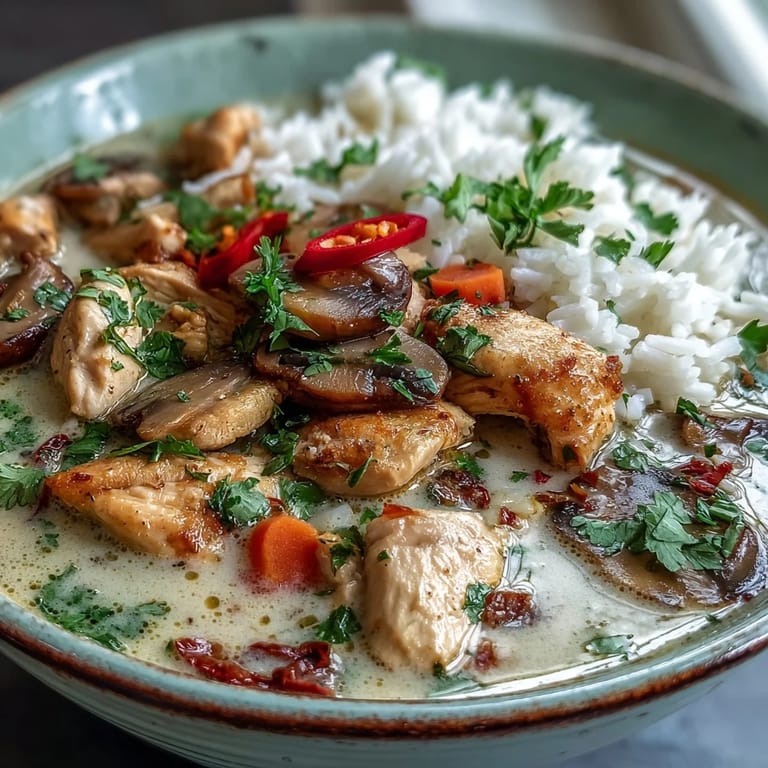
Save This Thai coconut curry soup is the kind of recipe that gets better every time you make it, because you learn where your own preferences live—whether you want more heat, more lime, more richness. It's become one of my most-reached-for meals, the one I know will turn a regular evening into something that feels a little bit like being cared for.
Recipe FAQs
- → Can I use chicken breast instead of thighs?
Yes, you can substitute chicken breast, but thighs remain juicier and more flavorful during the simmering process. If using breast, reduce cooking time slightly to prevent drying out.
- → How spicy is this soup?
The heat level depends on your red curry paste amount. Start with 2 tablespoons for mild-medium heat, and adjust up to 3 tablespoons for more kick. The coconut milk helps mellow the spice.
- → Can I make this ahead of time?
Yes, this soup stores well in the refrigerator for up to 3 days. Note that the rice will continue absorbing liquid, so you may need to add extra chicken stock when reheating.
- → What can I use instead of fish sauce?
For a vegetarian option, substitute soy sauce or tamari. Use slightly less as these alternatives can be saltier. Coconut aminos work well for a soy-free, milder option.
- → Can I freeze this soup?
While possible, freezing isn't ideal as the rice texture changes and coconut milk may separate. If freezing, slightly undercook the rice and reheat gently, whisking to recombine the coconut milk.
- → What type of coconut milk should I use?
Full-fat coconut milk creates the richest, creamiest texture. Light coconut milk works but produces a thinner broth. Avoid coconut milk beverages meant for drinking, as they're too watery.